
I collect school AI policies the way other people collect stamps. It began as research for this desk and became a mild compulsion: handbooks, syllabus clauses, honor-code amendments, from American boarding schools, Korean hagwons, IB programs, state systems. The stack is now thick enough to file, and filing is my love language.
The first finding is that everyone is improvising. Documents dated within months of each other from the same school contradict one another. One famous American district banned the tools outright in 2023, un-banned them in 2024, and now requires teachers to teach them. The policies are being written at the speed of panic, which is not a speed known for consistency.
The second finding is that, beneath the local chaos, every policy in my stack belongs to one of three families.
Family one: prohibition. The machine is a cheating device; using it is plagiarism; detection software will catch you. This family is shrinking, for an unsentimental reason — the detection software does not work reliably, and schools that promised enforcement they could not deliver spent a year generating appeals, false accusations, and lawyers. A rule that cannot be enforced is not a rule. It is a mood.
Family two: containment. The machine exists; we will fence it. Permitted for brainstorming but not drafting, allowed in some subjects and forbidden in others, required to be cited like a source. My stack's majority family. Its weakness is that every fence line is an honor system in disguise — nobody can actually see whether the brainstorm ended where the policy said it should. Containment is prohibition with better manners.
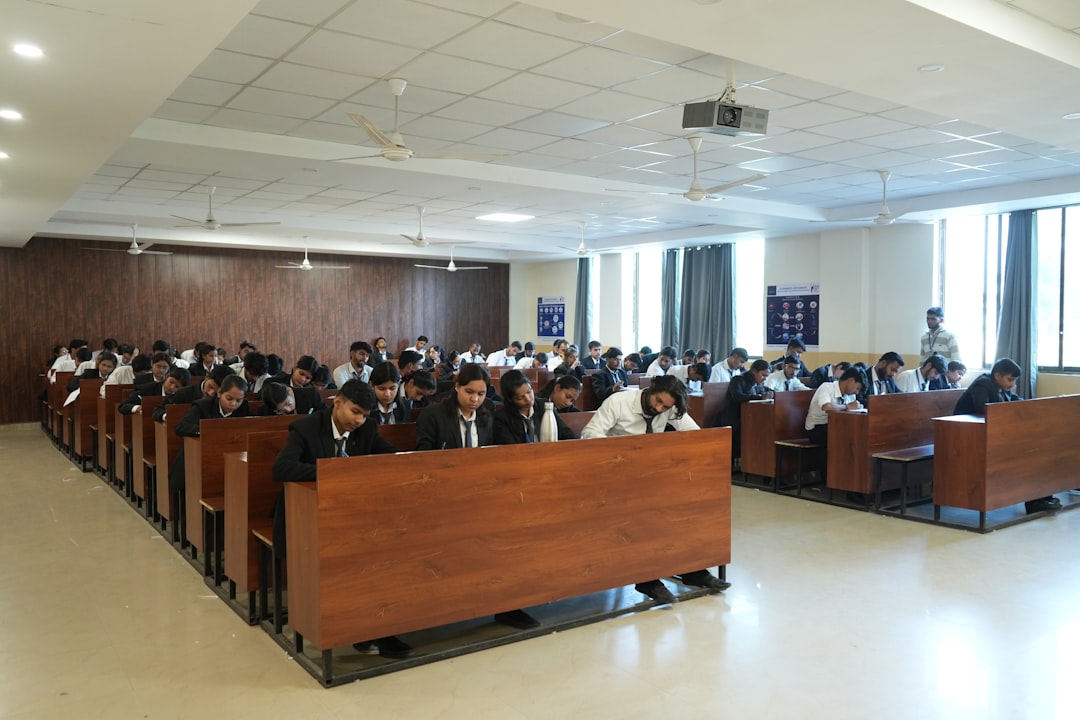
Family three, the smallest and the most interesting: redesign. These schools concluded that if a take-home essay can be produced by a machine in forty seconds, the flaw is not in the student. It is in the assignment. So the assessment moves — into the classroom, onto paper, into oral defenses, presentations, supervised drafting, projects with checkpoints. The exam returns; the process becomes the graded artifact. This family requires the most work from teachers, which is why it is small.
Three families, three beliefs about what homework was ever for. Prohibition believes homework certifies effort. Containment believes it practices skills. Redesign believes it was always a proxy — a stand-in for thinking that was tolerable only while nothing else could produce the proxy. The machine did not break homework. It revealed which schools were grading the thinking and which were grading the artifact.
For the record, the students are ahead of every family in the stack. Surveys — and hallway evidence — put regular AI use among secondary students at strong majorities in every country that measures it. The realistic question in front of every faculty meeting is not whether students will use the machines. It is whether the school's assessments will still measure anything afterward.
I have one bias to declare, filed under full disclosure: I come from a schooling culture that never stopped giving supervised, in-person examinations, and I watch the redesign family reinvent — with great excitement, at great expense — the proctored exam my grandmother would recognize. There is a certain comedy in the world's most progressive pedagogy departments rediscovering the bluebook. But comedy is not refutation. The bluebook survives because it answers the one question no machine can confuse: what can this particular student do, alone, right now?
My stack will keep growing; these documents are being revised faster than I can hole-punch them. Current filing, for the record: prohibition is dying, containment is coping, and redesign — expensive, slow, teacher-breaking redesign — is the only family whose policies will still make sense in five years. The drawer stays open. Every school in the world is about to tell us, in writing, what it thinks learning is.