Editor's Note: This month we formally welcome two new members of The Argosy: Jioh Lee, our new International & Education writer, who has spent twelve years in Abu Dhabi, and Kyusung Lee, our new Sports & Society contributor, writing from Texas. Their arrival prompted this month's topic — one this masthead of scattered Koreans knows from the inside. Lightly edited for length and clarity.

Minwoo Jung
Let me begin by welcoming Jioh and Kyusung properly. With your arrival, this paper now files from Seoul, Jeju, Georgia, Texas, and Abu Dhabi — which must make us one of the most geographically confused publications in student journalism.
And that is our topic. Every one of us is Korean, and almost none of us is growing up the way our parents did. Jioh, your debut essay called the in-between the place you are really from. Defend that.

Jioh Lee
Gladly. The question I have been asked my whole life is "but where are you really from?" The honest answer is: from the translation.
Twelve years in Abu Dhabi. Classrooms with thirty passports. Korean parents, inside a city that belongs to everyone and no one. I used to experience that as a deficit — everyone else had a one-word answer and I had a paragraph.
I have since decided the paragraph is the more accurate description of the world. It is the one-word answers that are going out of date.

Kyusung Lee
See, and I'll give you the opposite landscape. Texas might be the most rooted place in America. People's grandparents went to the same high school. There are pews with family names basically worn into the wood.
Being the Korean kid there means you're visible in a way you'd never be in Seoul. For a long time I read that as distance.
What changed my mind was noticing where the cultures rhyme. My town runs on faith, family, food, and football. Korean culture runs on the first three and has strong opinions about the fourth. My friends' families and mine are weirdly alike — same reverence for elders, same weaponized hospitality, same belief that love is a second helping you didn't ask for.

Saerom Kim
"Weaponized hospitality" is going in my notebook, Kyusung.
This is the whole subject of my Georgia series, so here's what the reporting keeps teaching me: the in-between isn't one place. It's layers, one generation deep at a time. The war veteran who carried Korea here seventy years ago. The pastors running one church in two languages. The kids at Saturday school groaning through worksheets exactly like I once did.
And every layer builds something for the next one — the church, the school, the restaurant. Belonging turns out to be a thing communities construct, brick by brick. Not a feeling you wait around to receive.

Yehee Jung
I want to complicate the premise, because technically I'm the control group — I live in Korea.
Except: I attend an international school on Jeju, studying a British curriculum in English, on an island my classmates' parents chose so their children could grow up global without leaving. The in-between is not only a diaspora condition anymore. Korea is importing it.
And the research is genuinely double-edged. Multicultural kids show real gains in flexibility and perspective-taking. The same literature flags rootlessness and identity stress, especially where the cultures disagree about achievement. Which, for Korean kids, they reliably do. The in-between is an asset that charges rent.
Minwoo Jung
"An asset that charges rent." This table is quotable today.
Then allow me the provocation. Each of us performs a small diplomatic mission daily — explaining Korea to your town, your town to your parents. Very well. But diplomats can become people with no country. Is there a point where between-ness stops being richness and becomes homelessness?
Jioh Lee
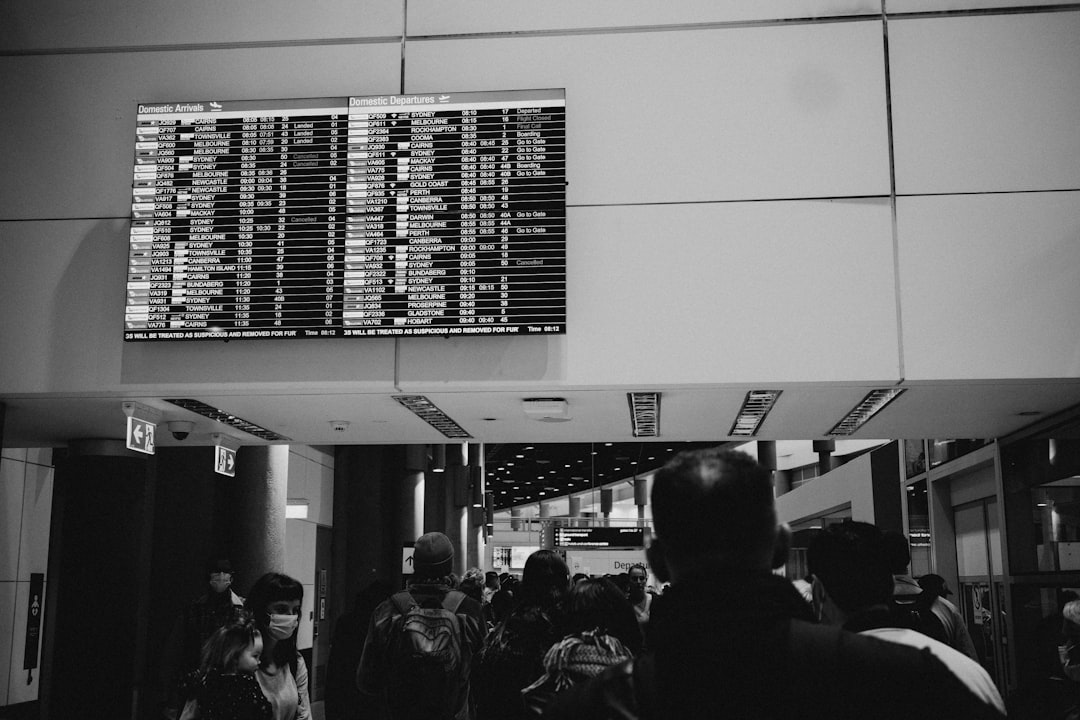
There is. I have felt it — at airports, usually, which will surprise no one.
The honest answer is that you need anchors that travel. In my family it is language, food, and the Sunday call to grandparents. The anchor is not a place. It is a set of practices.
Kyusung Lee
For mine it's the congregation — and yes, I hear it, that's funny coming from the table's resident agnostic. Not the theology. The pews. The gathering travels even when the believing is complicated.
I think that's what religious community has quietly done for immigrants forever. It's the luggage that carries itself.
Saerom Kim
And mine, I can admit at this table, is the story I've been telling. My series began as journalism and became a way of writing myself into a place. Interview by interview, I was assembling my own membership.
Writing as citizenship application.
Yehee Jung
Approved unanimously, for the record.
Closing statements
Jioh Lee
"Where are you really from" is the wrong question. The right one is "where are you building?" — and the in-between is very buildable land.
Kyusung Lee
Standing between two cultures, you see what each one does best. I get judged for the double vision sometimes. Wouldn't trade it.
Saerom Kim
Belonging is infrastructure. Somebody built ours — the church, the school, the grocery store. The least we can do is add a brick.
Yehee Jung
The in-between is a genuine advantage with genuine costs, and pretending it is only one of those fails the kids living it.
Minwoo Jung
Nations guard their borders; culture ignores them entirely. Everyone at this table is proof, and so, increasingly, is everyone's classroom.
What about you? If you've grown up between cultures — any cultures — we'd genuinely like to hear what anchors you. The comments are open.