
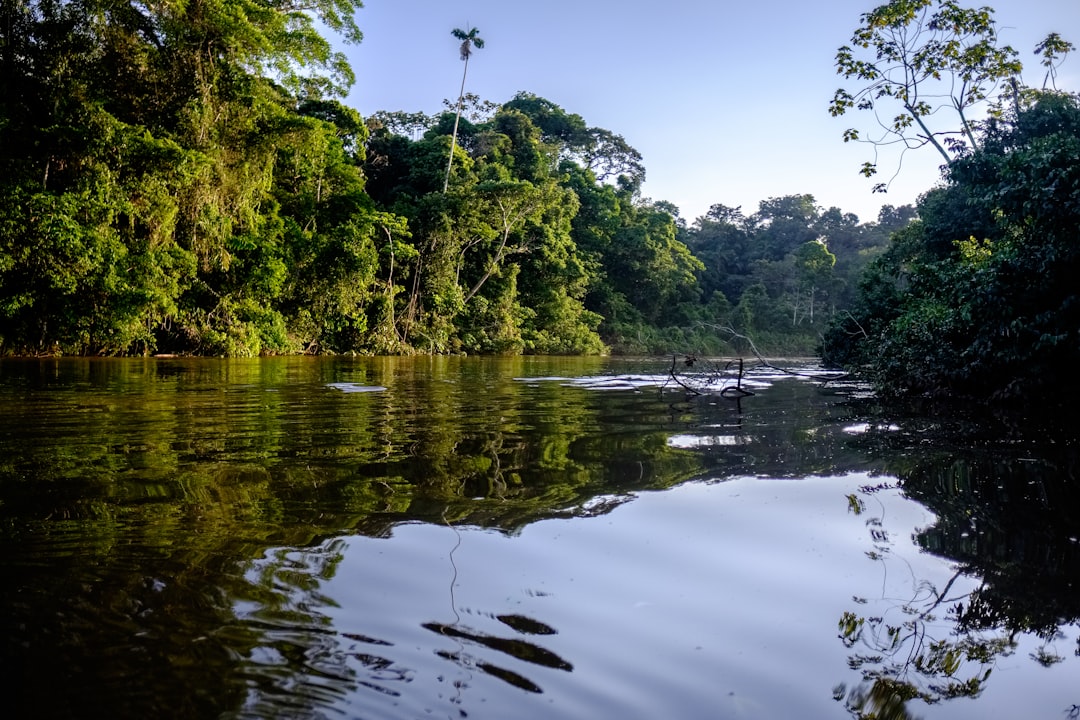
For thirty years, the world's climate summits have been held in convention centers that could be anywhere: Dubai, Glasgow, Madrid, identical carpeted halls sealed off from the thing being negotiated. This month, the negotiation finally went to the scene. COP30 convened in Belém, Brazil, at the mouth of the Amazon: humid, chaotic, logistically strained, and symbolically perfect. If you are going to argue about the lungs of the planet, you may as well do it where you can smell them.
Now that the delegates have gone home (a day late, as tradition demands), it's worth sorting what actually happened from what merely got announced. I kept a scorecard, because that is what we do with systems we distrust: one real innovation, one familiar failure, and one absence that changed the room's chemistry.
Line Item One: Paying Forests to Stand
The genuinely new thing at Belém was money with a new theory behind it. Brazil launched the Tropical Forest Forever Facility, a fund designed to pay tropical countries, year after year, for keeping their forests standing, with payments docked for deforestation. It launched with more than five billion dollars in anchor pledges, led by Norway and joined by Brazil, Indonesia, France, and Germany, with dozens of countries endorsing and a target of growing the pool into the hundreds of billions through investment returns.
Why does this matter when forest pledges have come and gone for decades? Because of the incentive architecture. Historically, a standing tree earns nothing and a felled one earns money; every rainforest nation has run that ledger alone. Carbon-credit schemes tried to fix it and tangled themselves in verification scandals. The new facility's design is blunter. It treats intact forest as global infrastructure, like a dam or a power grid, and pays for its maintenance out of an endowment, with satellites doing the auditing. Reading the design, I felt the enthusiasm rising and had to throttle it: whether the fund reaches the scale required is genuinely uncertain. But this is the first forest-finance idea in years where a skeptical engineer can trace the incentive loop end to end and find every arrow pointing the right way — which is rarer than it should be.
Line Item Two: The Words That Couldn't Be Written
And then there is the familiar part. Going into the final week, more than eighty countries, spanning Europe, Latin America, and the Pacific, pushed for the summit's declaration to include a roadmap for transitioning away from fossil fuels, turning the celebrated phrase from Dubai two years ago into an actual schedule. The oil-producing bloc refused. The final "Global Mutirão" text pledges to triple adaptation finance and speaks warmly of cooperation, but the fossil-fuel roadmap is simply not in it; the Brazilian presidency promised voluntary side-processes instead, which is diplomatic vocabulary for we could not agree.
The pattern deserves plain statement, because it has held for thirty consecutive conferences: the consensus process can name technologies to build but not industries to wind down. Anything can be added; nothing can be subtracted. The COP machinery is superb at scaffolding: funds, facilities, frameworks. It is structurally incapable of demolition. Belém did not break the pattern. It confirmed it, in the one venue on Earth where the stakes were visible from the conference windows.
Line Item Three: The Empty Chair
Hovering over everything was what wasn't there. The United States, the largest historical emitter, formally exiting the Paris Agreement, sent no delegation of consequence. Veterans of these summits described the strange physics that resulted: negotiations moved faster in some rooms, with the traditional superpower neither pushing nor blocking, while every finance conversation shrank around the missing contributor. China filled some of the vacuum, presenting itself as the stable, solar-exporting adult in the room. Whether that trade, a more agreeable summit for a poorer and less binding one, is good for the climate is a question I'd rather not need to ask. Standing armies of diplomats have now planned a decade of climate cooperation around the assumption that American participation is weather: sometimes present, sometimes not, never load-bearing.
Closing the Ledger
It is easy, and fashionable, to declare these summits theater. I decline, for one stubborn reason: the theater is where the trend lines get renegotiated, and the trend lines are genuinely bending. The world installed more clean power this year than any year in history; solar keeps shattering deployment records; the projected warming curves, while still far too high, have visibly flattened compared with a decade ago. None of that happened because a declaration commanded it. It happened because we made clean energy cheap (engineering's contribution; I permit myself one sentence of pride) and because diplomacy, slow, maddening, Belém-shaped diplomacy, kept ratcheting the expectations that direct where capital flows.
So the ledger closes: one mechanism worth watching, with real money behind it; one silence where a schedule should be; one chair that may stay empty for years; and, outside the hall, an energy transition that keeps accelerating regardless of what the hall can bring itself to write down. The summit, as usual, delivered less than the moment required. It also delivered more than the cynics predicted, which is the maddening operating condition of this entire beat. The Amazon hosted; the river keeps flowing either way. So, for now, does the work.