

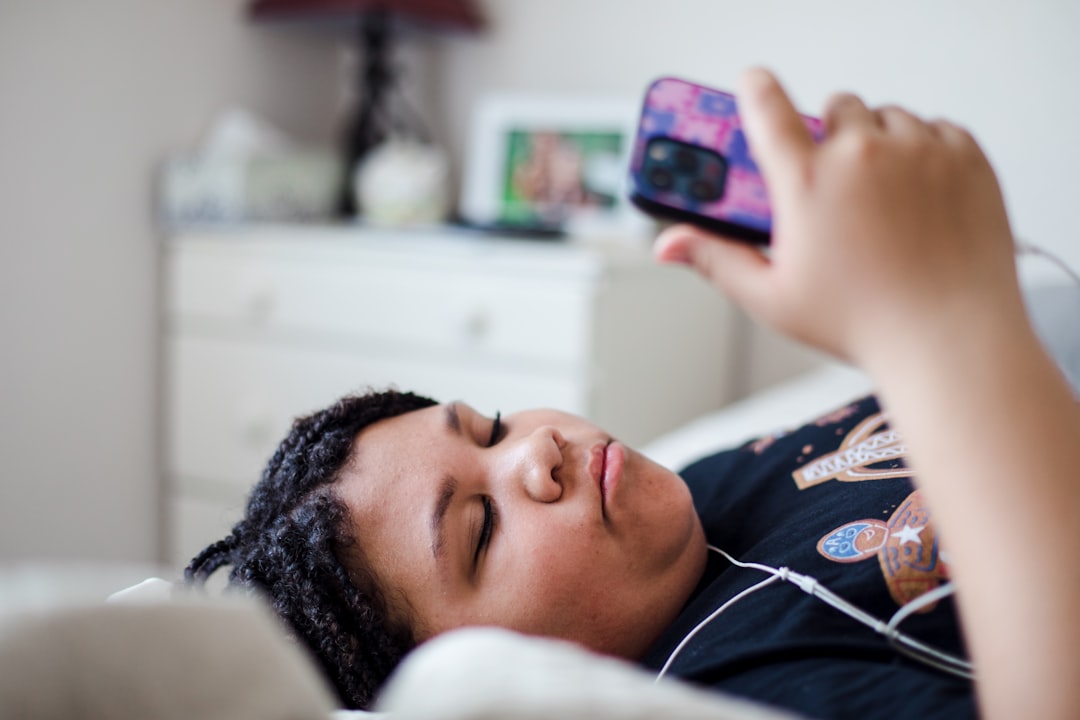
On December 10, Australia did something no country has ever done: it turned off social media for its teenagers. Under a world-first law, platforms from TikTok and Instagram to YouTube and Snapchat must block or deactivate accounts belonging to anyone under sixteen, with no parental permission override and fines against the companies running to tens of millions of dollars. Within days, millions of underage accounts had been removed or locked. An entire nation's thirteen-, fourteen-, and fifteen-year-olds have been logged out, by law.
I write about the psychology of media, and I have complicated feelings about this, which I promise to get to (you may recognize some of your own feelings in mine; that is usually how this column works). But first the scientific part, because it is genuinely unprecedented: the most contested question in adolescent psychology is finally getting something like an experiment.
What Have We Been Arguing About for a Decade?
A correlation everyone can see. Since roughly the early 2010s, the years smartphones and social platforms saturated teenage life, adolescent anxiety, depression, and self-harm have climbed sharply across much of the developed world. One camp argues the timing is no coincidence: that always-on social comparison, algorithmic feeds, and the migration of social life onto screens are driving the crisis. Another camp counters that the evidence is thinner than the headlines, that studies show small and inconsistent effects, that the same years brought academic pressure, economic anxiety, and global doom into teenagers' lives, and that we may be blaming the most visible change for a storm with many causes.
The frustrating part, and I say this with sympathy for both camps, is that the entire argument has run on correlational data, because you cannot randomly assign a generation to grow up without Instagram. Every study hits the same wall: teens who use more social media differ in a hundred other ways from teens who use less. The causal question has been, in the strict sense, untestable.
Until a country of twenty-seven million volunteered.
What Can the Experiment Actually Show?
Less than either side hopes, and more than we have ever had. Australia's ban is not a clean laboratory (real policies never are). Determined teenagers will use VPNs, borrowed accounts, and platforms outside the law's reach; group chats and gaming servers, which are largely exempt, will absorb some displaced social life; and a cohort that grew up online doesn't psychologically reset overnight. Researchers will struggle to separate the ban's effects from everything else happening to Australian teens.
Still, over the next few years, three questions should start answering themselves. The first is the population curves: do Australian adolescent mental-health indicators bend, relative to demographically similar countries that didn't ban (New Zealand being the natural comparison)? The second is the time question: screen hours don't vanish, they migrate, so where do they go, and is where they go better? If feed-scrolling becomes gaming voice chats or, optimistically, sleep and in-person time, the substitution matters more than the subtraction. The third is the one I keep thinking about: the social-fabric question. For isolated teens — rural kids, minorities, kids whose communities exist mostly online — platforms are lifelines as well as stressors, and a ban removes both at once. Whether the net effect helps the average teen while harming the vulnerable one is exactly the kind of finding blunt policies tend to produce.
Who Is the Audience for This Experiment?
Every legislature on Earth. Age-verification laws, school phone bans, platform liability bills: versions are moving in dozens of countries, and all of them cite the same contested research base. Australia jumped first, and its results, real or perceived, will be exported everywhere. Which is why the interpretation war started before any data existed. Advocates will call every improvement proof; skeptics will call every null result vindication. Readers of this column already know my standing advice about people who have the answer before the evidence arrives.
So Where Do I Land?
Honestly: in two places at once, and I have stopped apologizing for that. As a student of psychology, I think the strongest version of the harm thesis has always rested less on any single study than on design. Platforms engineered around variable rewards, social comparison, and infinite feeds are optimized for engagement, not wellbeing, and adolescents, mid-construction in identity and impulse control, are the users least equipped for that arms race. I wrote earlier this fall about doomscrolling's machinery; teenagers run that machinery without a finished prefrontal braking system. You don't need a definitive study to think the default settings of adolescence shouldn't be set by engagement metrics.
And yet the ban unsettles me, for a psychological reason too. Adolescence is when people learn to regulate themselves in the presence of temptation, and a fence postpones that learning rather than performing it, while teaching a generation that the adult response to a hard environment is confiscation rather than redesign. Prohibition is a blunt developmental instrument. The policies I'd bet on long-term look less like walls and more like architecture: chronological feeds by default, no engagement-optimized recommendation for minors, real friction on infinite scroll, honest age design instead of age bans.
But that's my prior, and priors are meant to be held loosely, and the beautiful, uncomfortable thing about December 10 is that mine now has an expiration date. I've been turning it over all week: the researcher in me is grateful, the part of me that remembers being fifteen is uneasy, and I suspect the two will trade places more than once before any data lands, which is perhaps the most honest forecast I can offer. Australia has run the cable into the storm. In three years, we will know things about teenagers and screens that a decade of argument could not establish. Whatever the data says, I'll report it in these pages. Including, especially, if it says I was wrong.