
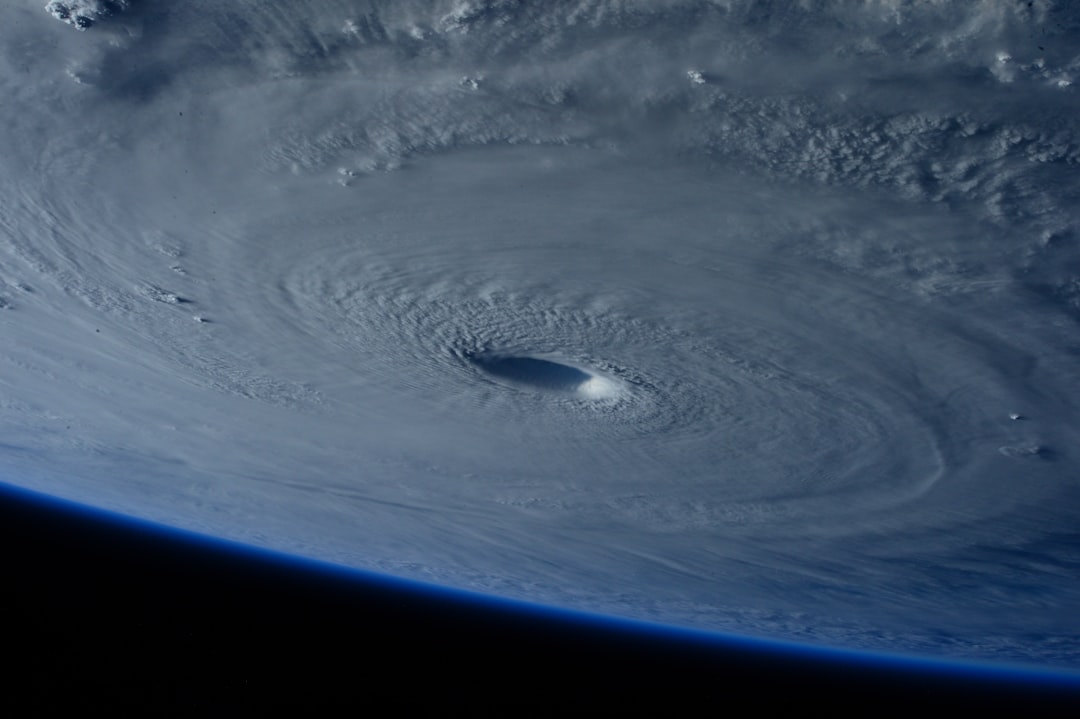
Jamaica has been keeping weather records for a long time, through a century and a half of hurricanes. Nothing in those records prepared it for the end of this October, when Hurricane Melissa came ashore as a Category 5 with winds around 185 miles per hour. It was the strongest landfall the island has ever measured, and at its peak it tied among the mightiest Atlantic storms ever observed. The damage estimates that followed made it the costliest disaster in the country's history. Across the Caribbean, dozens died, most of them in Haiti, where the space between heavy rain and mass casualty is thinnest.
One week later and half a world away, Typhoon Kalmaegi tore through the central Philippines and gave Cebu its worst flash flooding on record. Over a hundred dead. Hundreds of thousands displaced. A state of emergency, and rescuers who died in a helicopter crash on their way to help. Kalmaegi wasn't even finished; Vietnam was next.
Then, before the month was out, the Bay of Bengal and the Strait of Malacca produced back-to-back systems, one of them the first named cyclone observed in that strait in more than a century. Their rains sat over Sumatra, Sri Lanka, and southern Thailand until more than a thousand people were dead and half a million displaced across four countries.
Three regions. Six weeks. In each place, the same sentence in the news reports, translated into three languages: nothing like this in living memory.
The uncomfortable part sits underneath that sentence. Our whole system for living with disasters is built on a statistical idea called the return period. Building codes, flood maps, insurance prices, evacuation plans, all of it. The "hundred-year flood" is shorthand for a flood with a one percent chance in any given year, estimated from the past century of records. It is a probability, not a schedule: a hundred-year flood can come two years in a row, which sounds like a trick, but that is just how odds work. Still, the flood map hanging in a town office assumes the past is a decent preview of the future.
A warming climate breaks that assumption. Warmer oceans feed storms more energy, so the strongest storms get stronger and intensify faster, sometimes going from ordinary to catastrophic in a day, faster than evacuation timelines were designed for. Warmer air holds more water, roughly seven percent more per degree Celsius, so the same storm now wrings more rain out over the same hillside. The same storm, more rain. The dice are not just landing badly this fall. They are being reweighted in the middle of the game. When a "once-a-century" event shows up twice in a decade, the phrase is not unlucky anymore. It is just wrong.
It would be easy to leave this as a lament. But the wreckage teaches specific, fixable lessons if you look at it closely.
The first is that the deadliest variable is not wind speed. It is what the storm finds when it arrives. Melissa at Category 5 killed dozens in Jamaica; far weaker rainfall killed comparably in Haiti, where deforested hillsides and fragile settlements turn rain straight into deaths. Cebu's flooding was made worse by rivers that development had narrowed and clogged. The storm is weather. The disaster is what the storm lands on. That sounds like a technicality until you notice it is the difference between grief and a shrug for the exact same rainfall.
The second is that early warning is the cheapest life-saving technology we have, and it is still handed out unevenly. The forecasts for these storms were, by historical standards, remarkably good. The science saw them coming days out. The gap is the last mile: whether the warning reaches a fishing village, in the right language, with instructions people trust enough to act on, and whether there is anywhere safe to go. Closing that gap costs almost nothing next to the losses it prevents. The United Nations has a program that aims to get warning coverage to everyone on Earth. The fall of 2025 is its strongest argument to date.
The third lesson is about money, and it is the fine print of every disaster story, so I will be blunt about it. Insurance is how a modern society absorbs catastrophe: one town's worst week gets spread across millions of premium payments. But insurers price off those same broken return periods, and where the math stops working, they leave. Parts of the world, including some wealthy parts, are becoming uninsurable, and when the insurers go, the cost of catastrophe lands on whoever is standing there when it hits. Usually that means governments, and in the end the people least able to carry it. Meanwhile, the countries that drowned this fall contributed among the least to the emissions loading the dice. That imbalance has a name in climate diplomacy, loss and damage, and a new fund with more sympathy than money in it so far. I suspect this column will be coming back to that fund for years.
I know the risk with a piece like this. Lists of disasters make people go numb. Another storm, another toll, another appeal. So I want to end somewhere specific instead.
In the reporting from Cebu there is a detail I have not been able to put down. When the flood rose, neighbors formed human chains in chest-deep water and passed children along them toward higher ground. In the absence of good infrastructure, they improvised an infrastructure out of their own bodies. People are astonishing in the hour of catastrophe. The whole project of climate resilience is an attempt to be that good before the water arrives, to pour that same care into concrete, drainage, sirens, insurance pools, and building codes, the boring, sturdy ways of caring about strangers.
The atmosphere has already changed its statistics. The flood maps have not. Somewhere tonight one of them is still hanging on a wall in a town office, drawn from a century that no longer exists.