
Europe is melting through the hottest June it has ever measured. Western Europe's temperature anomaly this month has shattered the record set just last year, and the summer is young. The pictures come back every year now: tourists fainting at ancient monuments, cities opening churches and metro stations as cooling shelters, wildfire smoke over Iberia. And underneath the headlines, a smaller statistic is doing the real historical work. Air conditioner sales across Europe are surging, in countries that spent a century treating the machine as an American extravagance, vaguely vulgar, unnecessary in a civilized climate.
The civilized climate is gone. The machine Europeans are now buying by the million is my subject this week, because it is the clearest example of the problem this beat keeps circling: the technology that is the cure and also another dose of the disease.
The loop works like this. Heat waves kill, at scale, mostly the old, the sick, and the poor. The great European heat waves of this century have each claimed tens of thousands of lives, deaths counted afterward in mortality statistics rather than on any evening news. Air conditioning is, bluntly, the most effective life-saving device in a severe heat wave. Where it is widespread, heat mortality collapses.
But cooling wants electricity at exactly the hour the grid is most strained, the hottest afternoons, everyone's compressor roaring at once, and in much of the world that extra electricity is still fossil-fired. Add the refrigerants, which are potent greenhouse gases in their own right when they leak, and the loop closes. Warming drives cooling. Cooling, as currently powered, feeds warming. Warming drives more cooling.
It is easy to tell this story as tragedy or hypocrisy, and I don't buy either. A grandmother in Seville buying a unit for a heat wave is not a moral failure. She is responding sensibly to a danger she did not create. That is what makes the paradox worth studying instead of moralizing: it is a system problem, and system problems have system answers.
The fine print
The costs first, plainly. Roughly a tenth of the world's electricity already goes to cooling, and the world is projected to add billions of new units in the coming decades as incomes rise across the hottest parts of the planet. Most of the people who will ever own an air conditioner have not bought one yet. And the units they are most likely to buy are the bad ones. The efficiency gap between the best machines on the market and the average one actually sold is enormous, with the best delivering several times the cooling per watt of the junk that dominates price-sensitive markets. Cheap to buy means expensive to run, and that difference shows up later, on electricity bills on kitchen tables.
The good news, and this column tries to be exact about good news, is that the loop has exits. Four of them, all already under construction.
The first is the machines themselves. Closing that efficiency gap is pure policy: standards, labeling, bulk buying. A global efficiency push here is among the cheapest climate wins available anywhere. Cooling doubled, emissions flat, and nobody gives up anything except the worst products on the shelf.
The second is timing. Cooling demand peaks in the afternoon. So does solar power. No load on the grid pairs more naturally with solar panels; the same sun causing the demand can increasingly power the answer, with batteries, a returning character in this column, bridging the hard early-evening hours. The solar century I wrote about in April was, among other things, the announcement that summer afternoons are turning into the grid's easiest hours instead of its hardest.
The third is the buildings. A lot of air conditioners are apologies for architecture, for glass towers and treeless streets and the old wisdom (shade, thick walls, cross-breezes, white roofs) that the twentieth century paved over. Passive design, street trees, and reflective surfaces can shave degrees off a neighborhood before a single compressor starts. Cities from Athens to Ahmedabad now employ heat officers who plan for summer the way northern cities plan for snow. The cheapest cooling is still the cooling a shade tree does for free.
The fourth is honesty. Cooling is not a luxury anymore. It is infrastructure, like heating, like clean water, and it should be planned like infrastructure: public cooling centers as standard civic equipment, efficiency help aimed at the households least able to afford the good machines, and a grid built on the assumption that summers now arrive armed, instead of rediscovering it every June.
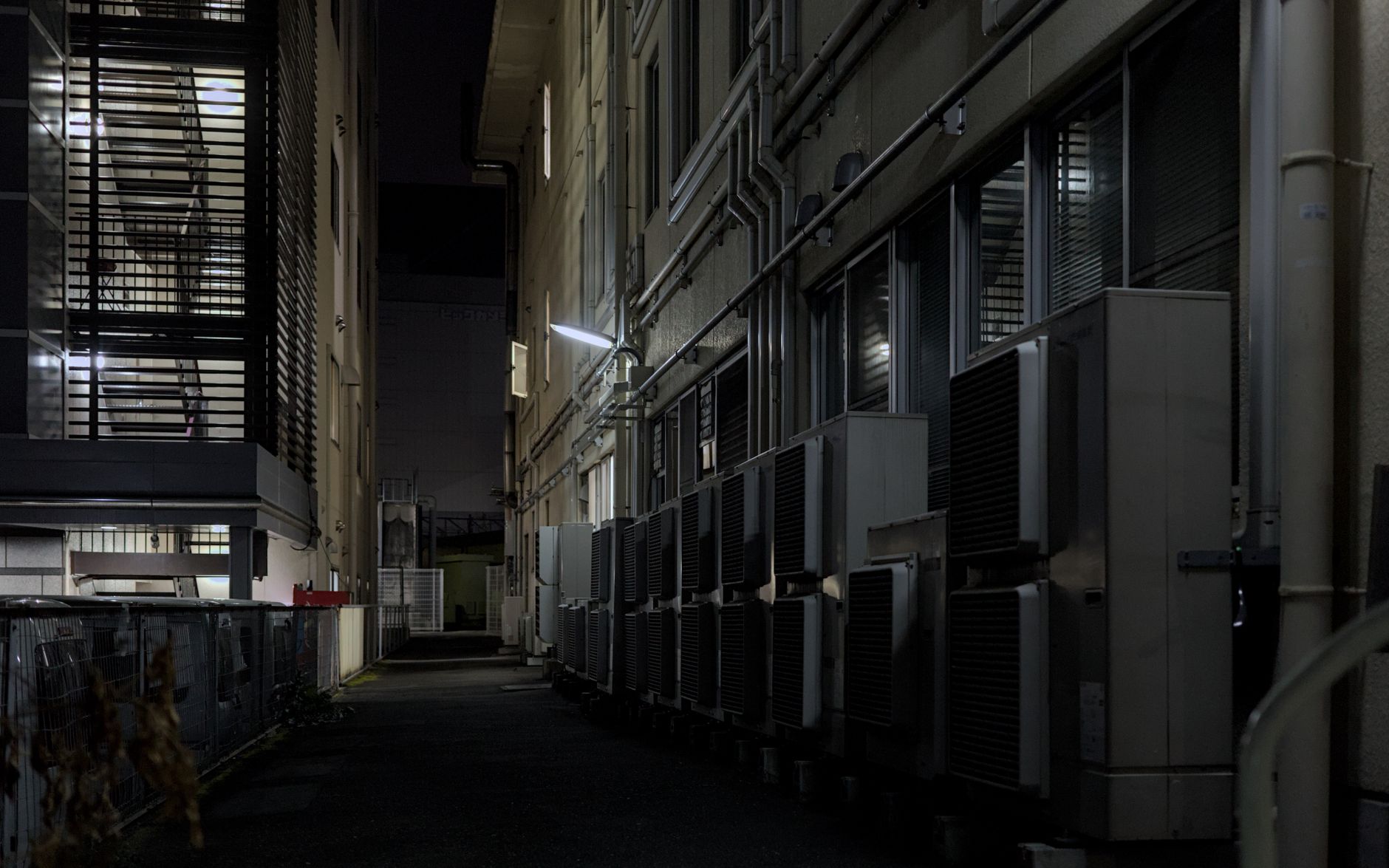
I will end where my columns keep ending lately, on the ground. Somewhere in Paris or Milan this week, a family that never owned an air conditioner is installing its first one, a small white box on a centuries-old wall, humming its flat note into a courtyard that Napoleon's contemporaries designed for a different planet. Multiply that box by a hundred million and you have the actual sound of climate adaptation. Not summits. Not slogans. Compressors, coming online, one strained afternoon at a time.
The job, for everyone who works on this, is to make sure that sound does not deepen the heat that called for it. The engineering exists. The sun even cooperates. What is left is the putting-together, which is most of the work. The box on the old wall hums either way.