
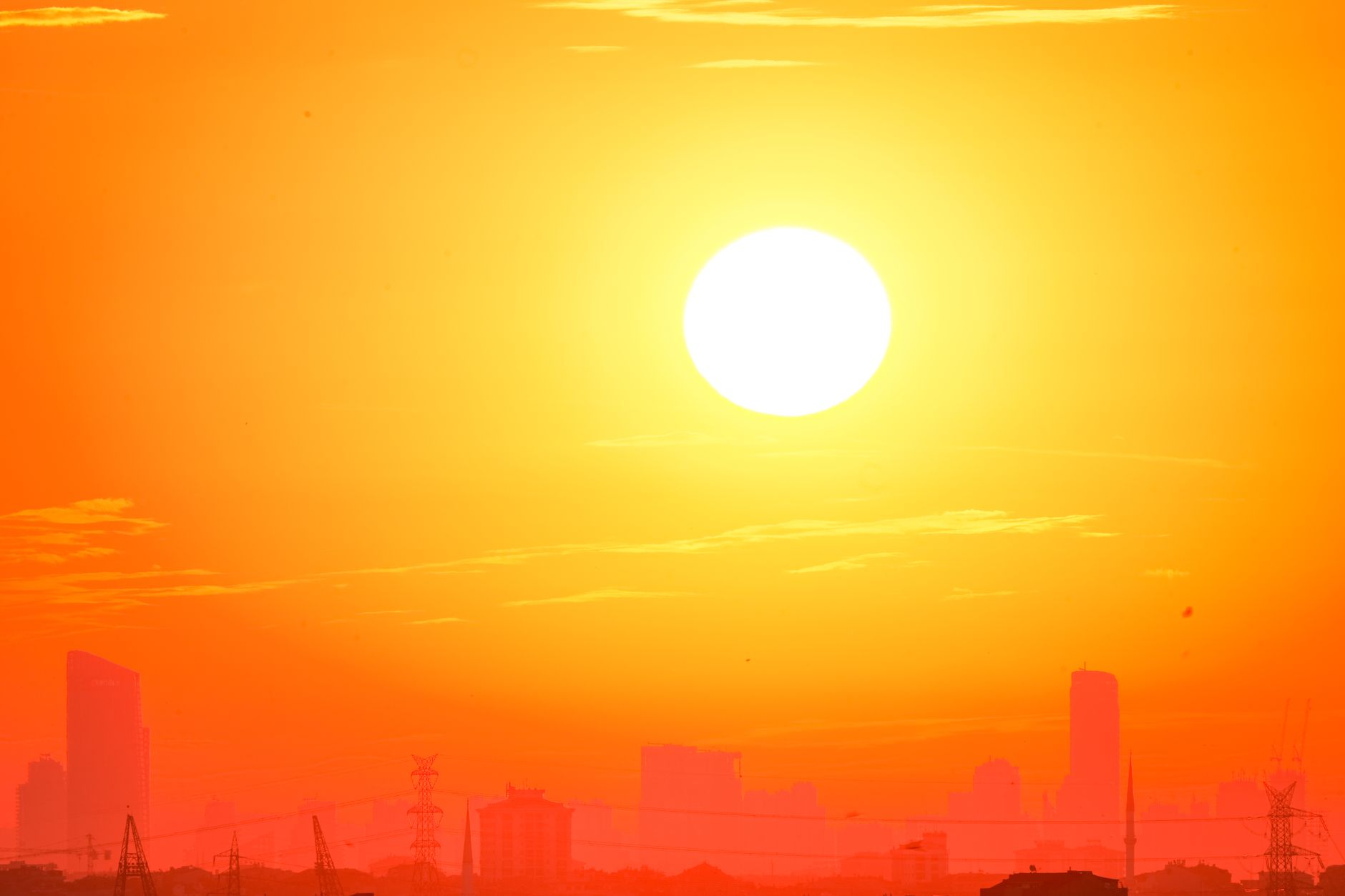
Two days before the final, the World Cup's true group of death can finally be named. It wasn't any trio of contenders. It was the 3 p.m. kickoff, in July, in a continental heat dome.
The players will confirm it. This tournament, magnificent by nearly every sporting measure, has been played against a backdrop of cooling breaks, drenched substitutes, and post-match interviews in which the world's fittest athletes describe conditions in language usually reserved for survival stories. Afternoon matches in the American interior have been contested in temperatures that turn elite sport into thermal endurance; coaches now game-plan hydration windows the way they game-plan set pieces. Europe, meanwhile, is spending the same weeks in its second consecutive record summer — my colleague David wrote about the air conditioners; Barcelona just logged its hottest day in over a century of records — so the billion-viewer audience is often sweating in solidarity with the screen.
None of this is incidental to my beat. The World Cup is the most-watched thing humanity does, and this edition has doubled as the largest demonstration ever staged of a question sport has stopped being able to postpone: what happens to the games when the calendar they were built on stops cooperating?
Three Variables Moved
Precision matters here, because the mechanism is not "summer is hot." Summer was always hot. Three variables moved.
First, the baseline. Heat waves that were once the tournament's occasional bad luck are now its expected operating conditions; the odds of a dangerous-heat afternoon in July, across the northern mid-latitudes, have multiplied within a single generation. Planning a July mega-event around 1994's climate is now a category error. This tournament was, in fairness, partly planned around the new numbers, with the hottest venues' roofs and the late-window scheduling absorbing some of what the atmosphere delivered.
Second, the economics collide with the physiology. The afternoon kickoffs exist for one reason: European prime time. Television, which funds everything, wants the world's biggest matches at hours that put players on the pitch at solar maximum. The trade-off accounting is stark. The win: a billion viewers at a comfortable hour. The cost: elite athletes at the thermal red line. The catch: only one side of that trade does the sweating. The tournament's rolling negotiation between the broadcast schedule and the wet-bulb reading is the purest case study anywhere of a civilization bargaining with physics using money. Physics, it must be reported, does not take the currency.
Third, the athletes are the visible tip. For every cooling break on global television there is an invisible pyramid below: youth tournaments, high school leagues, weekend amateurs, playing the same months without the ice vests, the medical staff, the roofed stadiums. Sports medicine has spent this decade rewriting heat protocols from the top down. The pace of adoption at the base of the pyramid, where the margins are thinnest and the coverage is zero, is the statistic nobody publishes.
The Great Rescheduling
What makes this a sustainability column and not a sports complaint: the world's games are already migrating, and almost nobody has named the pattern. The previous men's World Cup moved to November-December, for heat. Marathons have moved to dawn; entire race calendars have shifted seasons; cricket, tennis, and American football have all rewritten heat rules after public emergencies. The Winter Olympics, as this masthead discussed in February, is contracting toward a shrinking list of viable hosts and machine-made snow. Assembled into one drawing, the pattern is remarkable, and I use that word under supervision: the global sporting calendar, one of civilization's oldest seasonal architectures, built over a century around a stable climate, is being redrafted event by event to fit a planet that no longer honors the original blueprint.
Sport, it turns out, is one of the most sensitive climate instruments we have. It has hard physiological limits, immovable global audiences, and no ability to relocate indoors entirely, so it registers the new calendar before most institutions do. When historians want to date the moment adaptation went mainstream, they could do worse than the decade in which humanity started rescheduling its games.
The Final, and the Forecast
Sunday's final, Spain against Argentina, aristocrat against king, is a matchup even this column's strict word count cannot diminish. It kicks off in the New York area, in the evening, under a forecast being monitored like a second bracket. It will be, whatever the weather, one of the most-watched hours in human history.
I'll be watching two things. The football, obviously; I'm an editor, not a robot. But also the small print of the spectacle: the cooling breaks if they come, the shade patterns in the stands, the sixty-year-old fans fanning themselves through extra time. The future of mass gathering, previewing itself inside the world's biggest party.
The games will survive the new calendar; they always adapt, because a billion fans' worth of incentive is a powerful actuator. The question my beat keeps asking is smaller and harder: whether we treat the visible adaptations at the top, the roofs and rescheduled finals and ice vests, as a spectacle to admire, or as the memo they actually are, addressed to every school league and street game further down the pyramid, where the same sun arrives without a broadcast schedule to negotiate with it.
The final should be extraordinary, and I plan to enjoy it with a professional's hydration protocol. The heat game, whoever lifts the trophy, goes to extra time either way.