

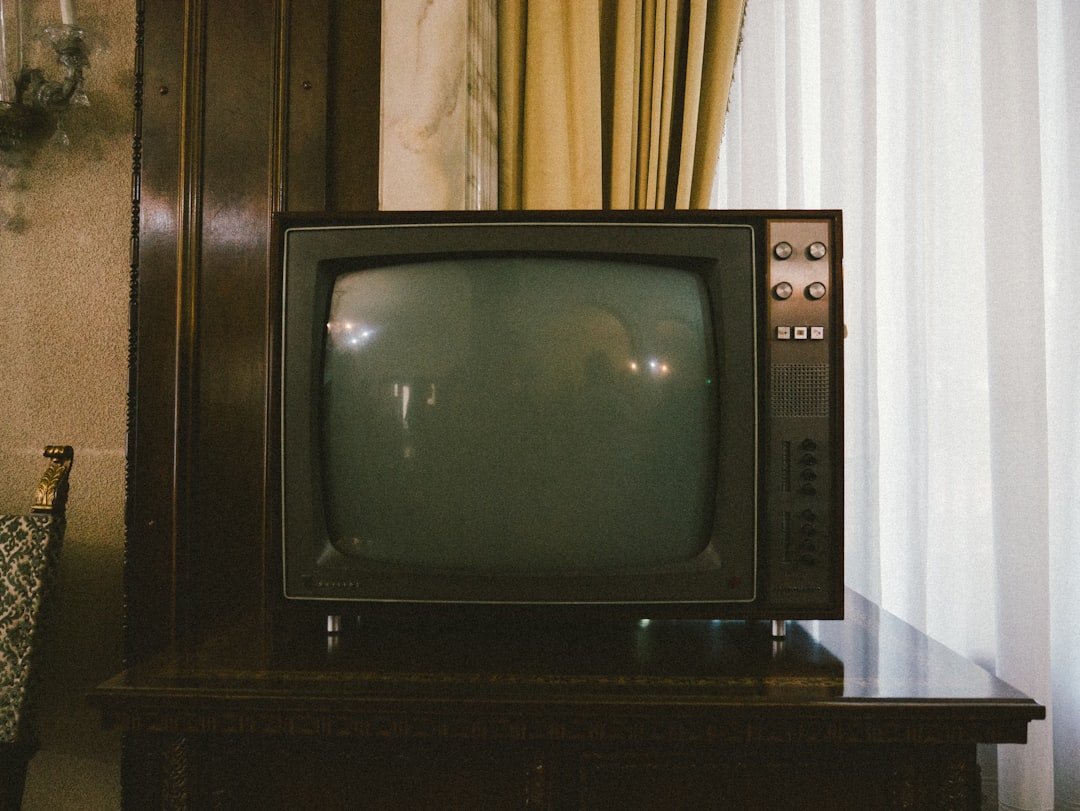
If you ask your parents what they watched on television growing up, something strange happens: they answer instantly, and so does everyone else their age. The same handful of shows, the same theme songs, the same finales watched on the same night by what looks, in retrospect, like the entire country. When MAS*H ended in 1983, more than a hundred million Americans watched it together, at the same hour, on the same channel. That's not an audience. That's weather.
The same question, pointed at you, goes worse. What's the show everyone you know is watching? Not a show some people are watching — the show. The one your teachers, your teammates, your group chats, and your dentist could all discuss. If nothing comes to mind, that isn't because culture got worse. It's because the monoculture — the era when a society consumed roughly the same cultural diet at roughly the same time — is dead. This column is its obituary, and like most obituaries, it's really about the survivors.
The Deceased, in Life
The monoculture was never a cultural achievement. It was a distribution accident. For most of the twentieth century, the pipes were scarce: three or four television networks, a few dozen radio stations, one local cineplex, one Top 40 chart. Scarcity forced aggregation. If there are only three channels, the biggest show on any of them is, by definition, enormous. Everyone drank from the same well because there was one well. Which is to say: the monoculture wasn't a golden age. It was a plumbing situation.
Then the internet blew up the well and replaced it with an ocean. Streaming services release more scripted television in a year than the old networks did in a decade. Music no longer funnels through radio programmers; it seeps through playlists, gaming soundtracks, and fifteen-second video clips. The algorithm hands each of us a personalized channel of one, a private Truman Show where you are the star, the demographic, and the only Nielsen household that counts. Infinite pipes mean no chokepoint, and no chokepoint means no moment when a hundred million people are forced to face the same direction.
The Case for Dancing on the Grave
Fairness to the present: the monoculture was also a monopoly on attention, and monopolies are rarely kind to the margins. The old system had room for a narrow band of stories, faces, and sounds, chosen by a small number of executives who looked remarkably alike. If your taste, your language, or your community fell outside the band, culture was something that happened to other people.
Fragmentation changed that. A Korean drama can top the charts in Kansas. A niche genre can sustain a scene of a few hundred thousand devoted fans, invisible to the mainstream and perfectly happy about it. An artist can build a career without ever passing through a gatekeeper's office. The long tail is real, and for the people who live in it, the death of the monoculture felt less like a loss and more like a jailbreak. Nobody holds a funeral for their jailer.
What We Buried With It
And yet. Culture is not only entertainment; it's social infrastructure. Shared stories are how strangers find common ground: the small talk that becomes real talk, the reference that tells you a person is, in some loose sense, from the same world as you. The monoculture manufactured that common ground at industrial scale. Every water-cooler conversation about last night's episode was, secretly, a small act of social maintenance.
Fragmented culture produces the opposite: a thousand deep communities with almost no bridges between them. You can know everything about your corner, every lore drop, every inside joke, and nothing about your neighbor's. I say this as someone fluent in three fandoms my best friend has never heard of. Increasingly, the only cultural events that reach everyone are the ones too big to ignore: a World Cup, a viral scandal, an election. It may not be a coincidence that as the shared middle of culture hollowed out, our public conversations started feeling like collisions between groups that lack even a common vocabulary of references. We didn't just stop watching the same shows. We stopped rehearsing the skill of caring about the same thing at the same time.
Sometimes the Corpse Sits Up
The monoculture does still flicker back to life, and the flickers are the interesting part. A stadium tour becomes a regional economic event. A film release becomes a costume party. A song becomes inescapable for one strange month. The common thread is load-bearing: these are events, not just content. They give people a reason to participate simultaneously, in public, together. Scarcity of time has replaced scarcity of channels as the thing that gathers us.
So the monoculture didn't die because we stopped wanting shared moments. It died because sharing stopped being the default and became a choice, and choices need summoning. The audiences are still perfectly capable of assembling; somebody just has to send the invitation.
Which leaves the rest of us holding the RSVP. You show up for the communal thing once in a while, on purpose, while everyone else is showing up too, and the common ground gets a pulse back for a night. A culture where togetherness is optional doesn't have to become one where it's rare. But it will, unless common ground gets treated as something worth scheduling.
In lieu of flowers, please watch something at the same time as another human being.