
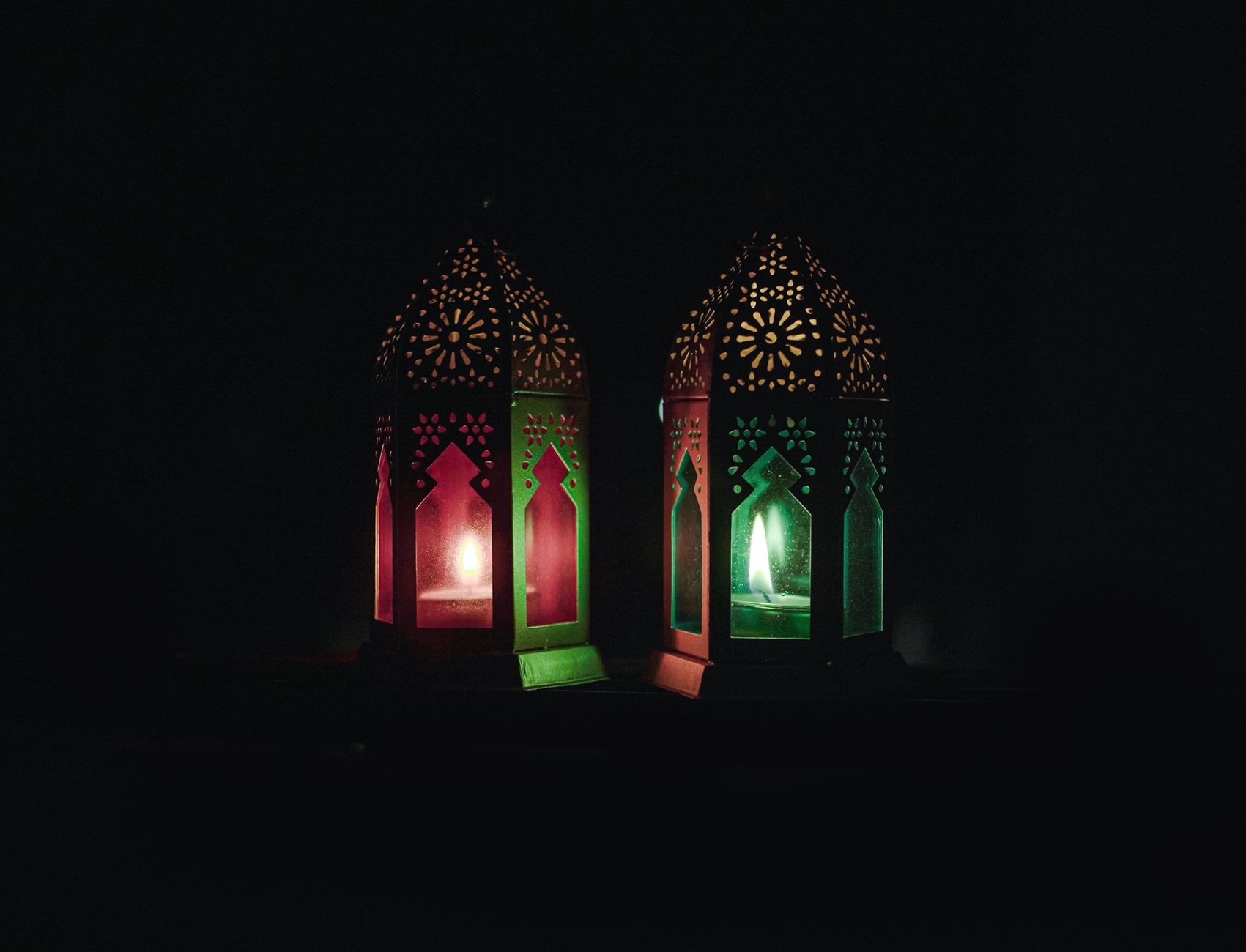
The first thing to understand about Ramadan in Abu Dhabi is that you can hear it. Not the cannon that marks the breaking of the fast, though there is one, and not the call to prayer, which threads the city year-round. What you hear is the subtraction: traffic thinning, mornings softening, the mid-afternoon hush of a fasting city conserving itself against the heat. A metropolis famous for its velocity spends a month, deliberately, in a lower gear. After twelve years here, my body knows the rhythm before the calendar announces it. The world is about to slow down, and slowness here is not failure. Slowness is the point.
I am not Muslim. At home my family kept its own faith and its own holidays through all our years in the Gulf, and no one ever asked us to do otherwise; outside the door, the city kept the month. You cannot grow up inside a fasting city without the fast shaping you, the way a Korean kid in Georgia, as my colleague Saerom has written, absorbs church suppers and Friday lights that are not, strictly speaking, hers. This is my letter about the month I have absorbed, written in my last spring on this masthead, in a season when the region I love holds its breath for other reasons entirely.
Outsiders tend to hear "Ramadan" and think of deprivation: no food, no water, dawn to dusk, for a lunar month. Living alongside it teaches you to see the architecture instead. The fast is a frame, and what it frames is everything else. The pre-dawn meal eaten with family while the city is still dark. The deliberate patience of the long afternoon. Then iftar, the breaking of the fast, which is not a meal so much as a nightly festival of hospitality.
The hospitality is what rearranged my understanding. Iftar tents rise across the city, at hotels, at mosques, in parking lots, and many feed anyone who arrives, worker or executive, Muslim or not. My first invitation came at age eight, from a classmate's family; I remember the dates and the water first, the pause of gratitude, and then the tide of food and noise and uncles. My most recent came last week. In between, I have broken fasts I never kept at more tables than I can count, and I have concluded that this may be the month's real technology: hunger, voluntarily shared, converting into an almost aggressive generosity. You cannot fully explain the Gulf, its contradictions, its codes, its stubborn warmth, without sitting in that tent.
To grow up as a permanent guest, a Korean in an Arab city, at international schools, inside someone else's sacred calendar, is to develop what I have come to think of as structured respect. You learn not to eat in public during the fasting hours, first as rule, then as habit, and finally as something like courtesy's muscle memory. You learn the greetings and when to offer them. You learn that your Muslim friends do not want your pity in the long afternoons and will, in fact, out-energy you at evening football.
A subtler lesson took me years to name: being adjacent to someone else's discipline interrogates your own. Every Ramadan, without anyone asking me to, I end up conducting a private audit. What do I do, voluntarily, that costs me something? What appetite have I ever framed rather than fed? My family's faith has its own answers and its own seasons of restraint, and it took a neighboring religion's month to make me curious about them. This, I suspect, is the unadvertised export of every serious tradition — practiced openly, it makes the neighbors examine themselves.
I said I would not write about the news, and I mostly won't. But honesty requires one paragraph. This Ramadan arrives with the region's air unusually still, the stillness of a neighborhood listening past its own walls, as war and rumor of war move through the wider Gulf. The tents are up anyway. The cannon sounds anyway. An older classmate told me his grandfather's version of the same spring, decades ago and elsewhere: "the month does not cancel for history." In that stubbornness, the insistence on hospitality while the world holds its breath, there is something steadier than any analysis I could offer. Cities, like people, reveal themselves under strain. Mine is revealing itself as a place that sets more tables, not fewer.
My colleague Saerom ended her Georgia series last week by asking what people carry. I have been packing my own answer since. When I leave this city, and the leaving is coming sooner than my childhood self would believe, I will carry a month. Not the theology, which was never mine to take, but the architecture: the idea that a community can collectively choose slowness; that discipline and celebration can share a calendar; that the correct response to your own hunger is to feed someone else's.
Twelve years in a fasting city, and that is what stuck. Generosity is also something you can absorb through the walls. May everyone keeping the month keep it gently this year. And may every city, whatever it believes, find one month a year to slow down and set a longer table.