
This week, in stadiums scattered from Mexico City to Vancouver to New Jersey, the largest sporting event ever staged began: the first forty-eight-team World Cup, one hundred and four matches across three host countries, a tournament so big it required a continent to hold it. The football will take weeks to sort itself out. The cultural event started immediately, and the cultural event is what this column is for.
Because a World Cup in your own hemisphere does a thing television can't, and a generation of American, Mexican, and Canadian kids is discovering it in real time: it stops being programming and becomes weather. It's in the traffic report. It's in the restaurant with the hand-lettered sign announcing which nation's fans have adopted it. It's in your group chats in three languages. The world's most global event turns out to be, up close, ferociously local.
Our Species' Biggest Group Project
Wide-angle lens on, because the scale deserves it. The World Cup is, by any honest measure, the largest shared experience humanity conducts: billions of cumulative viewers, more countries in its qualifying than the UN has members, which has to sting a little in New York. I've spent this year chronicling the death of the monoculture, the fragmentation of every audience into private feeds. The World Cup is the great exception, the one month when the species reassembles around a single text. And this edition literalized the expansion: forty-eight teams means sixteen more nations than ever before get to be in the text, including debutants whose entire diaspora populations, many living in the very host cities, get their first-ever chance to see the jersey on this stage.
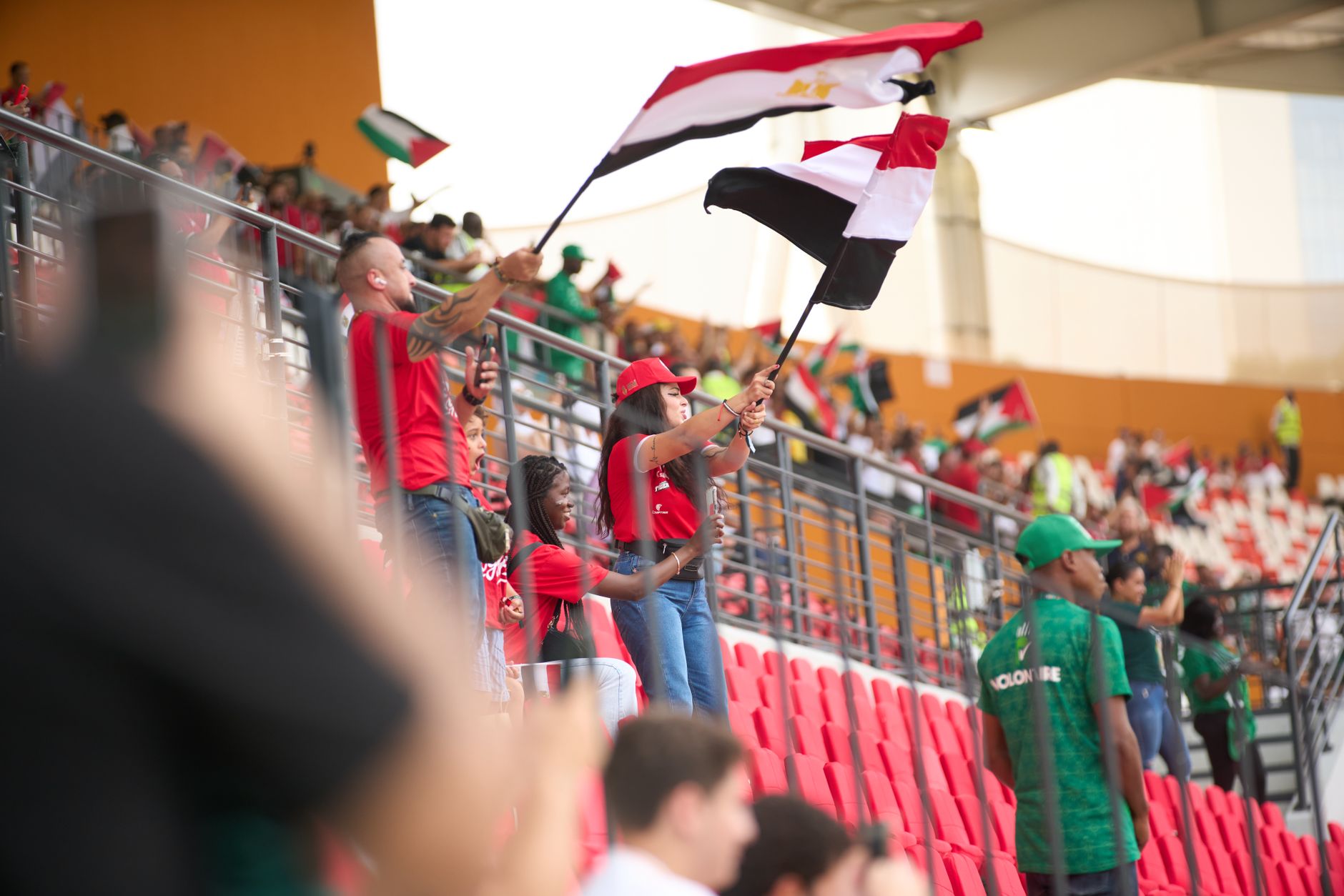
That's the underrated genius of holding it here, now. The United States and Canada are nations of everywhere; Mexico is football royalty in its own right. Which is to say: this is the first World Cup where nearly every visiting team plays some matches, effectively, at home. Colombia in New Jersey, Korea in Los Angeles, Morocco in Toronto, each surrounded by its own emigrated multitudes. The host isn't neutral ground. The host is everyone's second country.
The Machine Behind the Party
Regulars know this column audits every spectacle, so: the audit, briefly and without mercy. The expansion to forty-eight was a business decision before it was a sporting one — more teams, more matches, more media rights, more federations kept happy. The group-stage math got stranger; the best-thirds table is back, and so is the noble tradition of fans doing long division in the stands. Purists grumble, with some justice, that more is not better, merely more.
And the pricing tells its own story. This is the most aggressively monetized World Cup ever staged: dynamic ticket pricing imported from American sports, hospitality packages at prices that would embarrass a yacht broker, a resale apparatus taking its cut from both sides. The world's game, staged in the world's richest market, priced accordingly. The month's defining tension is visible outside every stadium, between the global street party and the velvet rope around it. Fandom always finds a way — the watch parties, the plazas, the bars — but the way costs more than it used to, and somewhere a federation official should be embarrassed that the people who make the World Cup the World Cup increasingly experience it from outside the perimeter.
My Scouting Report, Such as It Is
The football, obviously. Spain arrives as the aristocrat, Argentina as the aging king with one more campaign in him, and half the fun of a forty-eight-team field is that somebody nobody respects is going to wreck somebody's June. Korea's group, about which my predecessor Yonghyuk would already have filed three columns, is being monitored by this masthead with unprofessional intensity.
But what I'm really scouting is the anthropology. A World Cup on home soil is a mirror month: the host learns what it looks like hosting. Which cities throw open their plazas and which just surge-price the hotels. How a country in a fractious political season handles a million guests who don't care about its arguments. Whether the American sports fan, raised on climate-controlled certainty, scheduled timeouts, and the guarantee of a winner, falls for a sport that offers none of those things and occasionally ends 0–0 on purpose, one month before that fan's attention was scheduled to report back to training camp.
Mostly, though, I'm watching for the thing I write about all year without ever catching in the wild, my personal cryptid: the assembled audience. For one month, the fragmented culture gets its miracle. Strangers at the same screen. The office reorganized around kickoff times. The group chat unanimous for once, the rarest result in sports. The monoculture is dead; long live its one surviving festival, which had the good sense this year to throw itself in the neighborhood.
The party of forty-eight is open. Attendance, as ever, is the whole planet. Bring a flag. Any flag; around here, this month, they all count as local.