
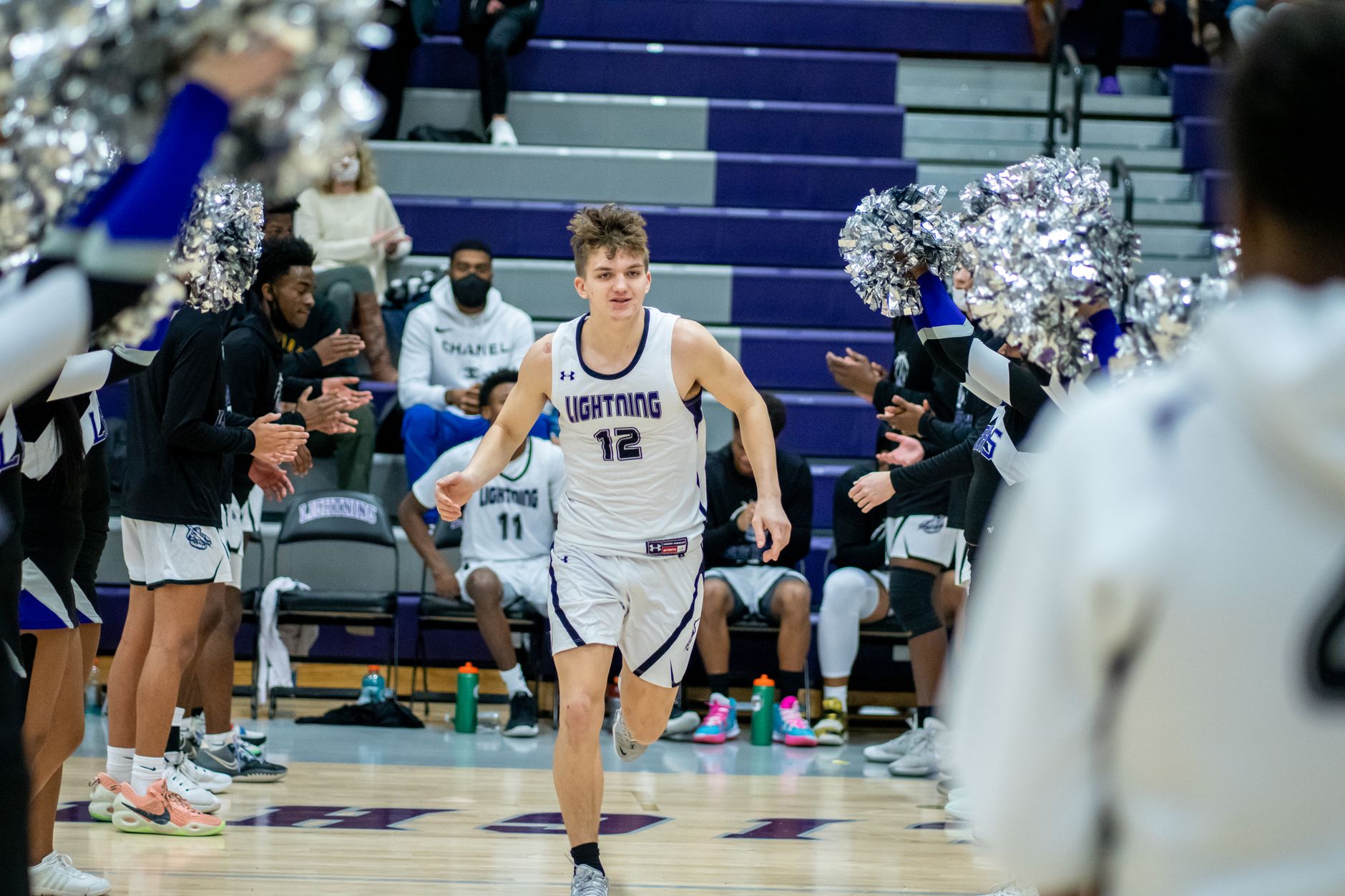
Editor's Note: Our Debate format pairs two writers on opposite sides of one question. With university revenue-sharing now a settled fact, the live question in American college sports is whether athletes should become what the law calls them nowhere and the economics calls them everywhere: employees. Sports editor Yonghyuk Choi argues yes; sports & society contributor Kyusung Lee argues no. Each wrote independently, then read the other's case before writing a short reply.
Yes: Call It What It Is — Yonghyuk Choi
The question sounds radical. It's actually clerical. Paperwork, not revolution. And yes, the sports guy just wrote "clerical" in a debate piece. Stay with me.
College athletes at the top level already work under conditions any labor lawyer would recognize in about four seconds: schedules set by supervisors, physical risk as a job requirement, performance reviews with termination consequences, revenue in the billions, and now, since the settlement era began, direct payment for services. The only thing missing is the word. My case is that the word matters, and that withholding it is the last trick of a system that spent a century underpaying its workforce through vocabulary. A century. Too blunt? Barely.
Look at the current halfway house. Schools pay athletes millions in "revenue share" while insisting they aren't employees. So: no contracts with guaranteed terms. No collective bargaining. No workers' compensation regime built for their injuries. No seat at the table where the rules of their own industry get written. Every protection an employee would get arrives, if it arrives at all, as a gift from the same institutions whose interests run the other way. We rebuilt the company town. Better graphics, same town.
And employment fixes the architecture, not just the paycheck. Contracts would stabilize the exact chaos traditionalists keep mourning: a signed three-year deal binds a player to a program far better than amateur nostalgia ever did. Ask any professional league — rosters there are more stable than the transfer portal, not less. Unions would negotiate what no individual nineteen-year-old can: health coverage that outlasts eligibility, practice limits, a cut of media rights, standards for how schools handle injury and dismissal. And the bargaining table would finally seat the people the entire enterprise is built on. Radical stuff, I know.
The standard objections dissolve on contact. "Most programs lose money." Most athletes in money-losing sports would fall outside employment tests anyway, because the tests turn on revenue and control. Nobody's proposing salaried rowers. "It will kill Olympic sports." Schools chose to fund those sports from football surpluses and can keep choosing to. A university that can pay a coach eight figures can keep the swim team. "They're students first." So are the students paid to staff the library, the lab, and the dining hall. All employees. None corrupted by the W-2.
Kyusung will tell you, eloquently, that something communal dies when the jersey becomes a job. My answer: it already died. And the athletes didn't kill it. The adults did, the ones who monetized every square inch of the enterprise and exempted only the labor. You can't sell a sport for billions and then ask its workers to preserve, unpaid, the amateur soul you sold. The soul left in the television deal. All that's left is to pay the people honestly. And honest payment, in this country, comes with a word.
No: The Job Will Eat the School — Kyusung Lee
Somewhere in a student section this winter, a kid is pointing at a linebacker and telling the stranger next to him, with real pride, that the guy sits two rows over from him in history class. I want to keep that kid in view, because he is what this debate is actually about, and because I concede nearly everything else. Yonghyuk has the history right. The old system was exploitation with a fight song, and I've said so in these pages. What I contest is the remedy, because employment is not a payment mechanism. It is a relationship with its own logic, and that logic devours whatever stands next to it.
Make the athlete an employee and the university becomes, in law and then inevitably in practice, an employer, and employers manage assets. Underperforming assets get released. The soft landing that lets a benched sophomore keep his scholarship and his degree goes away, because a contract cuts both ways, and the school's side of it will be drafted by the same athletic departments Yonghyuk rightly distrusts. Employees can be traded, assigned, restructured, and the first conference-wide labor agreement will contain, within a decade, mechanisms nobody now proposes out loud. The student half of "student-athlete," thin as it already is, becomes a compliance fiction, because no employer schedules around organic chemistry. The degree — the one asset that outlasts every knee — slips out of the bargain without a press release. The minor leagues can tell you how much education travels with a paycheck. Not much.
Then there's the map. Employment law is state law and vote-by-vote politics, so the moment athletes become employees, fifty legislatures and every public-university board become sports regulators. States will compete on labor terms the way they compete on taxes, and the gap between the dozen programs that can run payrolls and the hundreds that cannot stops being a gap and becomes a legal wall. The March tournament that lets a small school shock the world exists because everyone is, formally, playing the same game. Employment ends the formality. Eventually it ends the game.
My deeper objection comes from the bleachers I write from, and I'll grant up front that bleachers are not a law school. The college game's value, including its cold market value, flows from being embedded in something that is not a firm: a campus, a town, that kid two rows over from his linebacker. Embeddedness is why a college rivalry outdraws professional teams in the same state. Convert the enterprise into employer-and-staff and you don't get the NFL. You get a worse NFL with lecture halls attached, and the belief that filled the stadium drains out on a schedule nobody can predict until it's gone.
There is a middle road, and we're standing on its first mile: revenue sharing without employment, athlete representation on governing bodies, guaranteed multi-year scholarships, lifetime health coverage for injuries, collective input formalized through associations rather than unions. Messier than Yonghyuk's clean word, I know. But it pays the athletes while refusing to let the job swallow the school. Some institutions are worth an untidy legal category. I'd rather patch the halfway house than burn it down for the honesty of the ashes.
The Replies
Choi replies: Kyusung's middle road has one flaw. Every protection on it stays a revocable gift. Associations "consulted" by management are suggestion boxes. And his beloved embeddedness survives employment just fine. European soccer has paid its players for a century, and the local identity is still ferocious. Fans adapt to honesty faster than institutions predict. They always do.
Lee replies: European clubs were never universities, which is the very distinction I'm defending. Yonghyuk keeps proving that athletes deserve power, then calling it proof that they need employment. The strongest labor movements in this country's history built their power without waiting for management's category. Let the athletes organize as what they are: the indispensable heart of something bigger than a firm.
Where do you land? Employees, or something new without a name yet? The comments are open.