
The AI boom's famous names are famous: the chip designer with the trillion-dollar logo, the labs, the cloud giants. Without high-bandwidth memory, every one of their machines is an expensive space heater. Three companies can make it at scale. Two are Korean.
How those two became the AI era's winners is the season's best economics lesson. Like most Korean economic stories, it comes with a sting in the tail.
The Bottleneck
Modern AI runs on specialized processors with an appetite problem: they compute faster than ordinary memory can feed them data. The fix is high-bandwidth memory, HBM, in which memory chips are stacked vertically and wired straight to the processor. Every serious AI accelerator on Earth is built around these stacks. The processors are famous. The memory is the constraint. No HBM, no boom.
Making HBM at scale is brutally hard. The stacking, the heat, the yields. By the time demand detonated, the field had narrowed mostly to three firms, two of them Korean: SK Hynix, the early mover that bet on HBM when it looked like a niche, and Samsung, the giant racing to catch up, with an American firm third. The early bet paid off in one of the great market-share coups in semiconductor history. SK Hynix holds the commanding share of the HBM market and supplies the most important chipmaker in the world. Its latest earnings read like corporate legend: revenue near one hundred trillion won for 2025, profits roughly doubled in a year.
The strategic lesson fits in one sentence. In a gold rush, the sure money is in shovels, and Korea, this cycle, sells the shovels.
KOSPI 4,000
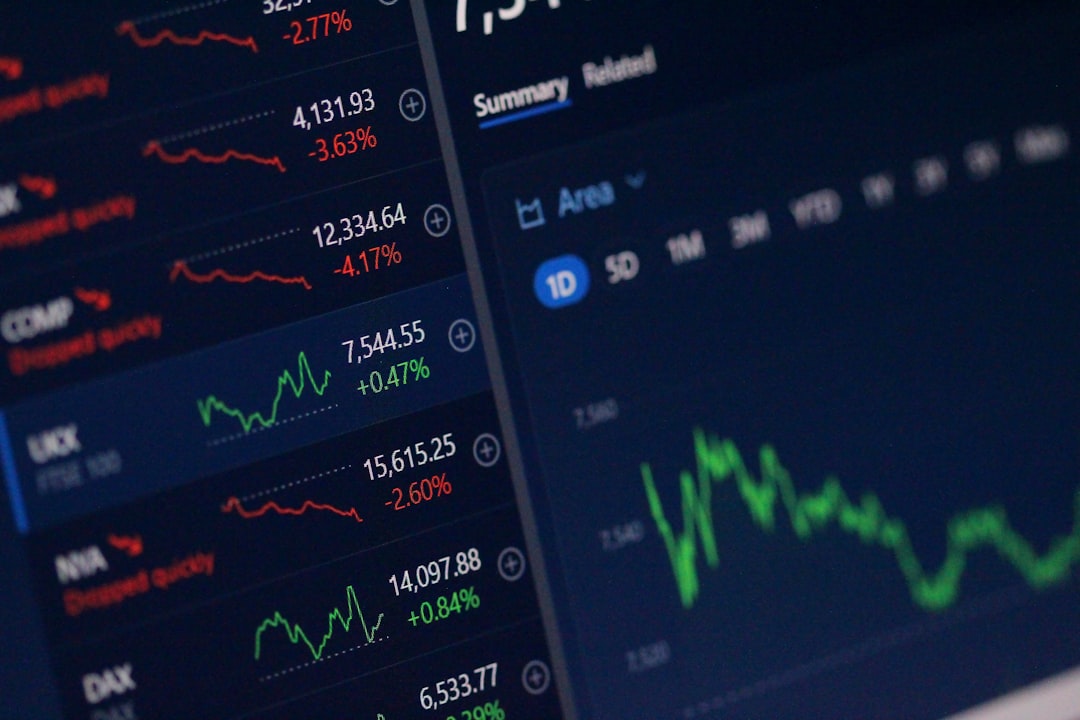
The Korean stock market noticed. The KOSPI had spent years grinding sideways, so famous for underperformance that locals coined the phrase "Korea discount." This winter it smashed through 4,000 for the first time in its history and kept climbing, driven overwhelmingly by the two memory makers and their supply chains. A generation of Korean retail investors had given up on their own market and moved savings into American tech stocks. For them the rally carried a charge close to vindication. The national champions, dismissed for years as makers of commodity chips in a cyclical industry, now sit at the center of the age's most important technology.
Trade politics moved the same direction. This fall, Seoul and Washington finalized a sweeping deal: enormous Korean investment commitments in American shipbuilding and strategic industries, in exchange for capped tariffs. Whatever its long-run costs, it removed for now the scenario Korean exporters feared most.
The Sting
Now the won. While the KOSPI made history, the currency slid toward its weakest levels in many years. A booming stock market and a sagging currency sounds like a contradiction. It is a diagnosis, and it is worth learning to read.
Part of the story is mechanical. A strong dollar pressures most currencies, and the foreign investors who buy Korean chip-boom stocks hedge away the currency while they do it. Part of it is structural, and the structural part matters more: the boom is narrow. Memory chips carry the export numbers while much of the rest of the economy treads water. Construction. Domestic consumption. The small firms that employ most Koreans. A currency prices the whole economy. The stock index, increasingly, prices two companies. The gap between KOSPI euphoria and won weakness is the measurable width of Korea's dependence on a single, gloriously cyclical industry.
Cyclical is the operative word. Memory has always been a boom-bust business, and the industry's veterans carry the scars of half a dozen gluts. The bull case says AI demand has broken the cycle, that memory is now less a commodity than a co-designed component, ordered years ahead. The bear case says every supercycle in history has produced exactly that sentence, usually near the top. Nobody knows. The companies are pouring record profits into record capacity, and the bet is national, whether the nation voted on it or not.
The Stack
The position was not luck. HBM rewards decades of process engineering, yield discipline, and the nerve to spend on capacity during downturns, and SK Hynix accumulated all three across cycles that repeatedly threatened to end it. Fifty years took Korean industry from commodity maker to critical bottleneck.
The famous names will keep the headlines. The invoices route through Korea. The KOSPI prices the two companies. The won prices the country. The distance between those two numbers is the running cost of being indispensable at exactly one thing.