
The rice cooker came first, in house after house — named the way other cultures name heirloom silver, with the same reverence. One woman, who came to Georgia in the 1980s, still owns hers. It no longer works, and she no longer needs it to. "It fed the first ten years," she said, and nothing else needed saying.
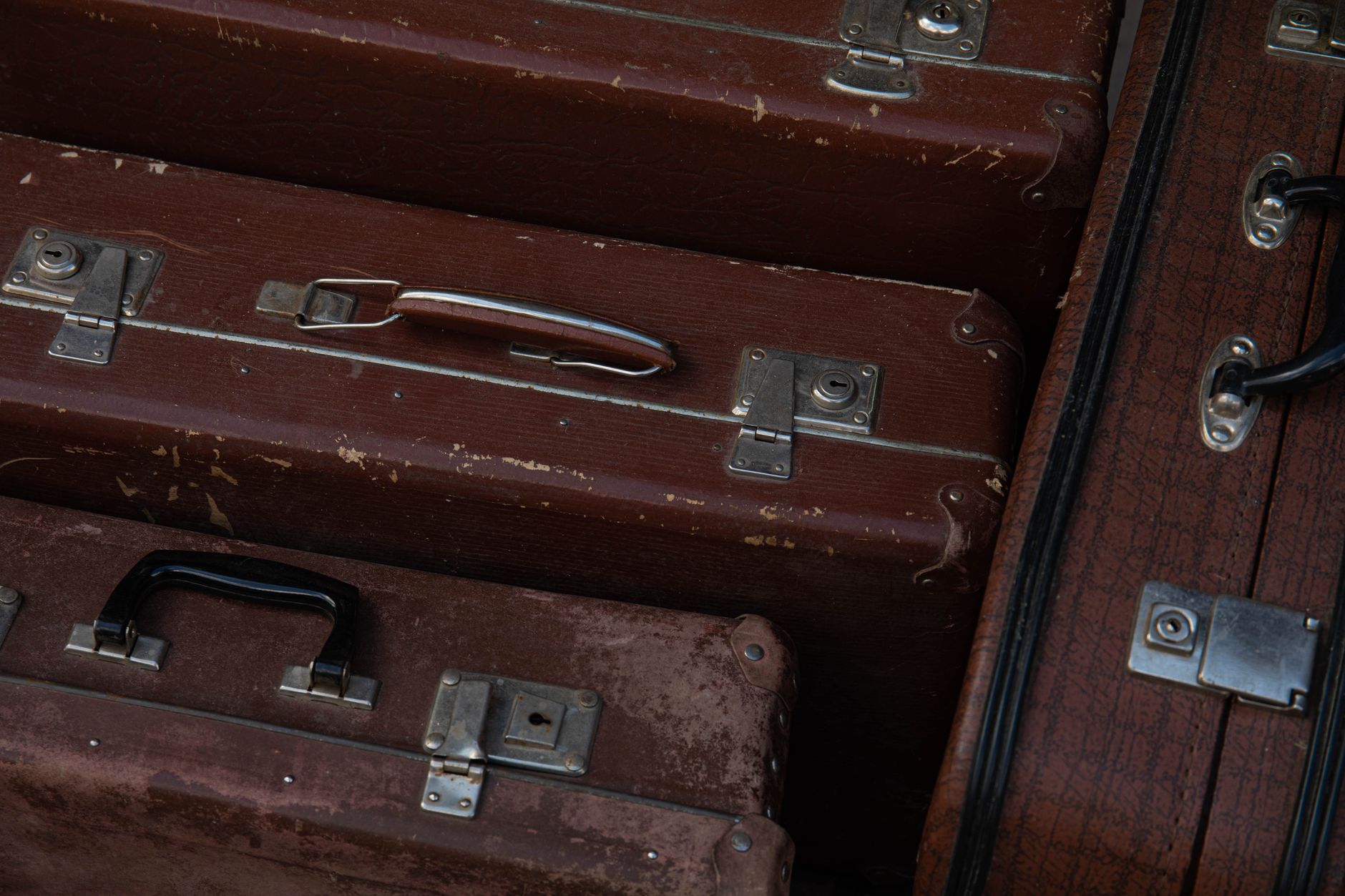
I always knew this series would end with a question rather than a place. Over these two years I have taken you to the restaurants and the churches, the Saturday schools and the veterans' halls of Korean Georgia, and for the final part I traveled lighter than I ever have. I carried one question from kitchen table to kitchen table and asked it of everyone, grandmothers and pastors, shop owners and teenagers, the war veteran who taught me about small weathers: When you came here, what did you carry? I meant it literally at first. The literal answers were wonderful.
There were jars, always. Pepper paste and soybean paste, wrapped in towels against breakage, carried through airports by women who had been told American food would be plentiful and who understood, correctly, that plentiful and sufficient are different words. One family told me about a grandmother who sewed dried anchovies into a coat lining and carried them past customs with the serenity of someone who had already survived far worse than customs. The statute of limitations, we agreed, has expired.
Photographs, of course, but specific ones, because albums were too heavy. A single wedding portrait. A picture of a mother standing before a house that no longer exists. One man carried his father's funeral photo, the formal kind, because, he said, "someone had to keep his face."
A church directory from a congregation in Seoul, carried, its owner admitted, not to contact anyone but as proof that she had once been known. A dictionary with a broken spine. A student's chemistry textbook, in Korean, kept "to remember I was good at something, before I had to be new at everything."
And then, in nearly every conversation, the same turn. After the literal answer came a pause, and after the pause came the real one. The rice cooker was never just the rice cooker. If you ask what people carried and then sit still long enough, they will tell you about the invisible luggage.
They carried rank, and its loss. The engineer who became a stockroom worker, the teacher who became a seamstress, professionals demoted by geography, carrying their former selves like documents from a country that no longer certifies them. Several wept telling me this, decades later. The American story prefers its immigrants grateful and ascending; the truer story includes this grief, carried out of sight, usually forever, usually so the children would not have to watch the carrying.
They carried obligation, too: the remittances, the phone calls timed to Seoul mornings, the weight of being a family's outpost. And they carried one very particular fear, which more than one person described to me in nearly the same words — the fear of dying somewhere no one could pronounce their name.
The second generation, my generation, carries the inheritance of all that carrying. The teenagers I interviewed at Korean school, back in the fall, are carrying it now: the language kept "so the door stays open," the achievement that must justify the demotions, the funeral photo that will someday need a keeper who can read the name on it. Ours are lighter versions, translated versions. But nobody in this story travels empty-handed.
Which brings the question home, because I have asked everyone else for their honesty and this series is owed mine. When I started writing, I framed myself as a newcomer documenting a community. That was true, and it was also a shield. The real reason I knocked on all those doors, I understand now, is that I was assembling my own luggage, collecting, interview by interview, the proof that a person can be carried by a place she was not born in. The veteran's small weathers. The pastor's two-language benediction. The ajummas who loaded my plate and asked about my mother. I came to learn what the Koreans of Georgia carry. I leave understanding that, for two years, they carried me.
This is the final part of "Koreans in Georgia," and it ends the way the journeys it documented always end: not with the arrival, exactly, but with the unpacking. Somewhere ahead of me is a new room, a new town, new weathers to learn, and I already know what will make the trip. A jar of something my grandmother would recognize. A photograph. The Georgia light in late winter, thin and gold and rationed, folded up small — where no customs officer will ever find it.
And one question, the only souvenir I trust, ready for whichever strangers are generous to me next: what did you carry? I have learned that you can ask it anywhere, at any kitchen table on earth, and the whole human story will unpack itself in front of you, still smelling faintly of anchovies and home.
— This series is dedicated, with gratitude, to everyone who opened a door.