
The first time I saw it, I was new to all of it, and I remember standing very still. The final whistle had gone, two teams of boys had spent two hours hitting each other as hard as the rules allow, and now they were walking toward each other at the fifty-yard line, both sides together, kneeling in one circle to pray. Nobody announced it. Nobody seemed surprised by it but me. I remember thinking: whatever is happening here, it is not just sports.
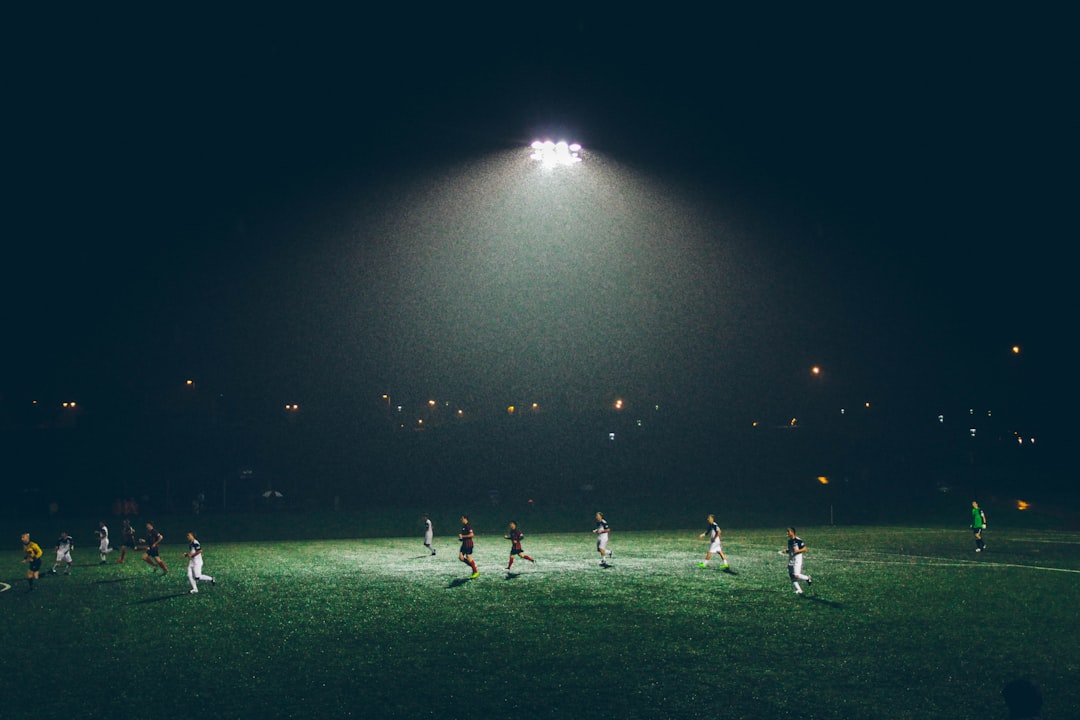
That was a Friday night, under stadium lights you can see from the highway, and it is one of the two moments every week when my town gathers in one place. The other comes on Sunday morning, across a couple dozen churches, when many of the same people assemble again. I have spent years walking back and forth between the two, and my first piece for The Argosy comes out of that walking. I went looking for two separate worlds. I found one continuous one.
Start with the numbers, because outsiders never believe them. High school football stadiums in Texas can seat more people than some college venues, and a town of ten thousand can put a meaningful fraction of itself in the bleachers on a Friday, and it does. The marching band has rehearsed all week. The dance team has rehearsed all week. Little kids play their own imaginary games behind the stands wearing jerseys with the names of teenagers they idolize, the concession stand is run by somebody's mother, and the chain gang is worked by somebody's grandfather. It took me years, and I am not a quick study of my own home, to understand that the football is almost beside the point. Friday night is the town performing itself, to itself. A weekly ritual of belonging with a scoreboard attached.
If that sounds like a description of church, it should, because the parallels are not subtle. Both have liturgy: the national anthem, the fight song, the alma mater sung win or lose with arms around shoulders. Both have vestments and processions, sacred spaces you do not walk on, elders who guard tradition. Both mark the calendar, the season with its ordinary weeks and its high holy days against the rival town. And both make the same large promise, that you, individually small, belong to a body older and bigger than yourself, one that will outlast you.
The connection runs deeper than structure, too. Here, faith and football are openly intertwined in ways that would startle people from elsewhere. Coaches speak the language of ministry, of shepherding and sacrifice and being "poured into." Churches schedule around game nights and host team dinners. And the boys pray at midfield, both teams in one circle, which is where I came in.
I should say where I stand, or where I sit. My family's faith came with us to Texas the way faith often travels with immigrants, as an anchor when everything else is moving. Church was where my parents found people who would explain the school system, recommend a mechanic, celebrate our small victories. I say my family's faith on purpose. Mine is more of an open question, and I have made my peace with watching from the aisle seat. But those years taught me, early and in my bones, what a congregation is for. What Friday night taught me is that a town can have more than one kind.
Honest watching means seeing the shadows, though, and there are shadows. A ritual that binds a community together also defines who belongs to it, and the definition is not always generous. The intensity poured into teenage athletes can curdle into pressure no seventeen-year-old should carry: playing hurt, serving as a town's emotional weather system, hearing grown men discuss your failures at the gas station. The gas station deserves its own column someday — in a town like mine it is the third gathering place, everyone passing through with a verdict — but the verdicts find the boys, and the boys are seventeen. The same overlap of faith and football that moves me can exclude the classmate who worships differently, or not at all, and still just wants to play. And every year some boys learn too late that the town's love was for the jersey, not the kid inside it. A community's most beautiful rituals and its bluntest ones are usually the same rituals. I intend to keep saying so in this column.
Still, I keep going back, and not only for the games. We are all supposedly atomized now, alone with our screens and our private algorithmic worlds, yet twice a week I watch physical gathering stubbornly persist. Nobody streams Friday night alone in their room. You have to be there, in the cold, next to people you did not choose, singing words you did not write. Sociologists have a name for the feeling this produces, collective effervescence, the electricity of being one body, and they note with some alarm how few places still reliably generate it. My town has at least two. They meet on Friday and on Sunday, and I have come to believe they are the same congregation in different clothes.
This column will live at that intersection, where sports meets faith, community, and identity, in Texas and beyond. There is more happening under those lights than a game. Come stand in the bleachers with me. I'll save you a seat near the band, where the cold is worst and the singing is loudest.