
There are weeks when history moves at its usual pace, and there are weeks like the one just past, when it moves all at once, and everyone alive understands, in real time, that they are watching a chapter break.
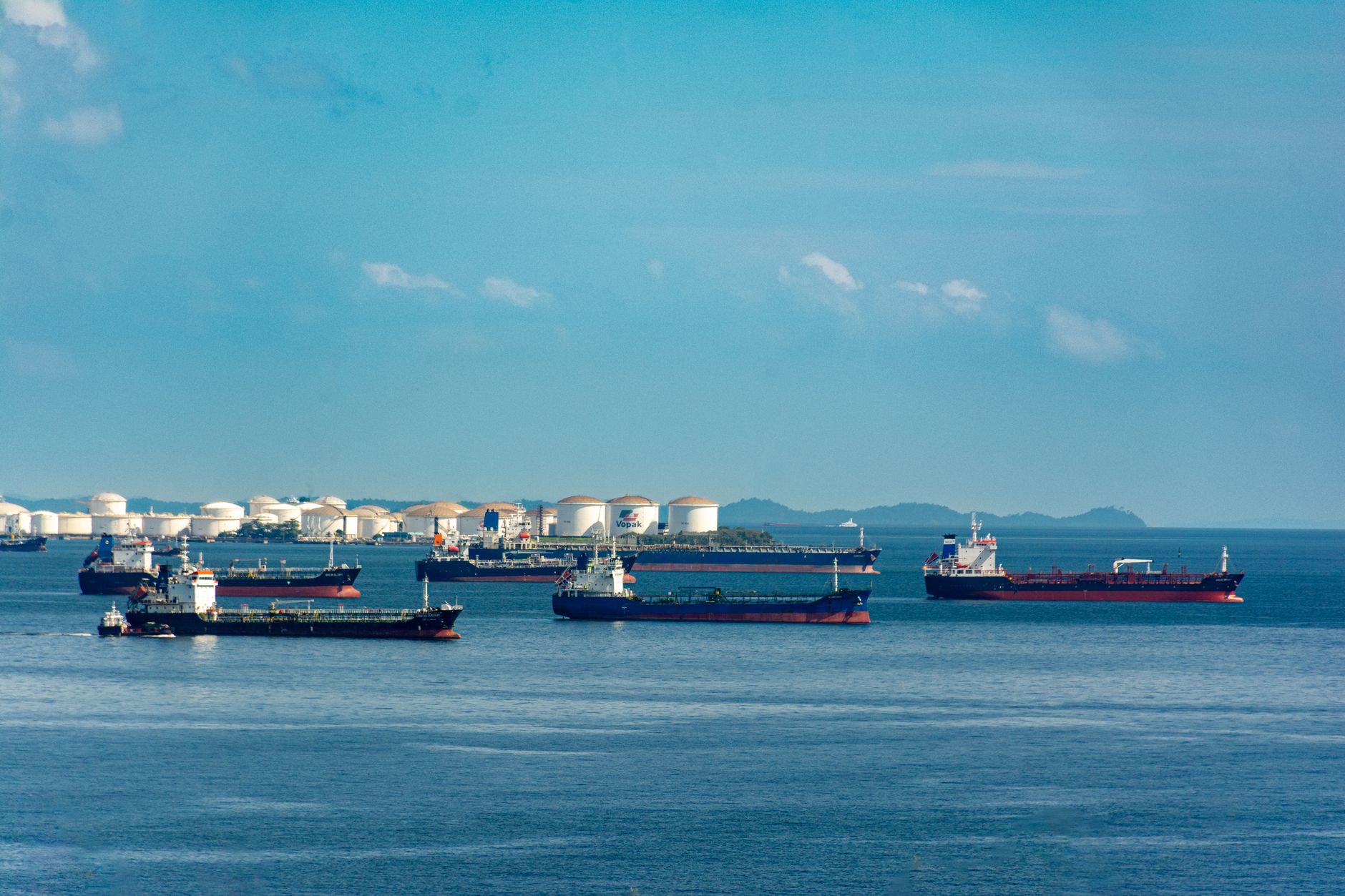
The facts, as this column goes to press, stated as soberly as the moment permits. In the final days of February, Israel and the United States launched massive coordinated strikes on Iran: its nuclear facilities, its air defenses, its command structure. Among the dead, confirmed within days, was the Supreme Leader of Iran, Ali Khamenei, who had ruled since before this newspaper's editors were born, along with the core of the country's military leadership. Iran has answered with missile barrages against Israel, against American bases, and against Gulf states, and has closed the Strait of Hormuz, the channel through which a fifth of the world's oil passes. A new Supreme Leader, the old one's son, has been installed with a speed that tells its own story about who was prepared for this moment. Oil prices have surged; navies are converging; every government on Earth is recalculating.
This column will not pretend to know how it ends. Anyone who claims to know is performing. What a student of international politics can do in such a week, and must do, is name what has actually changed, and consult the record of history about each change. Three changes stand out.
The first is the death of a taboo. Since 1945 the major powers have observed an unwritten rule: states may pressure, sanction, subvert, even bomb one another, but the deliberate killing of a head of state is a line crossed only against the weak, and rarely even then. The rule was never moral; it was reciprocal. Leaders spared leaders because they, too, were leaders.
That line has now been crossed against a state of ninety million people, with the world watching. Whatever one thinks of the man, and this column has no tears for a regime that brutalized its own young people, armed proxies across a region, and hanged protesters the age of its readers, the precedent is the thing to study. Rules of this kind, once broken by the strong, do not break once. Every leader of every state in confrontation with a stronger power has just revised, permanently, his assumptions about what is possible. Some will seek accommodation; history suggests that others will seek the one insurance policy that has reliably deterred such strikes, which is, of course, precisely the outcome the strikes were meant to prevent. The next decade will reveal which instinct won, and no open question in world politics matters more.
So much for the taboo. The second change is that the world is about to test, once again, the oldest fallacy in strategy: the belief that decapitation is conclusion. The theory behind such operations never varies; remove the leadership, and the system beneath will collapse or moderate. The record is not encouraging. The assassins of Caesar discovered that removing the man is not removing the system, and the discovery has been repeated at intervals ever since. Systems built for siege, and the Islamic Republic has been building for siege for forty years, tend to have succession plans, and the successors tend to be harder men than the ones removed, chosen precisely for loyalty in catastrophe. The swift installation of the new Supreme Leader suggests the machine, however wounded, did not stop.
What follows a wounded machine is rarely a treaty; it is improvisation, factions and escalations and feelers, all at once. A closed Hormuz cannot stay closed forever, since Iran's own economy strangles on it too; but between "cannot stay closed forever" and "reopens soon" lies a region's worth of dangerous bargaining, conducted by a leadership that has just learned its adversaries will go all the way. The guns going quiet in Gaza this fall taught the region that exhaustion can end wars. How much exhaustion this new war requires first is the open question.
The third change is legible in who is not shooting. China, whose economy drinks from Hormuz more deeply than America's, has condemned, mediated rhetorically, and moved not one ship; Russia, treaty partner of Tehran, has offered statements. Their inaction teaches a lesson as important as the strikes themselves: in the current order, only one power projects decisive force at global range, and everyone now knows exactly how willing it has become to use it. That knowledge will organize world politics for years, in arms budgets, in alliance hedging, in the private calculations of middle powers from the Gulf to our own peninsula. This column is written, after all, in a country that lives beside a nuclear-armed sibling and under an American security umbrella. Nothing about this week is abstract in Seoul.
Through elections and ceasefires, coups and comebacks, this column has tried to hold one discipline: separate what we know from what we feel from what we hope. A week like this strains it. What we know is that the region's oldest confrontation has entered territory without maps, that a taboo four decades old is gone, and that the world economy is holding its breath at a strait twenty-one miles wide. What we feel — and I will allow myself the first person this once — is vertigo: the sensation of watching the "unthinkable" become Tuesday.
And what we hope is smaller and stubborner: that somewhere in the improvisation ahead, on all sides, there remain people whose work is the off-ramp. There usually are. They are rarely the loudest people in the room. Whether anyone still listens to them is the question on which weeks like this one turn, and on which the next chapter will be written.