
September is sign-up season. Club fairs, cleanup days, petitions: for a few weeks every year, the price of joining something drops to an email address, and a great many people pay it. Anyone who has ever organized anything knows what happens next. The sign-up sheet is not the project. The second visit is.
That gap is the question this column keeps circling, and the one behind JellyWatch, the citizen-science jellyfish tracker I founded: less which climate fix works than why anyone shows up for one, and what brings them back. Here is what the research says about the second visit. It is less romantic than the brochures.
The Curve Nobody Posts
The most useful study I know on the subject is a 2015 paper in the Proceedings of the National Academy of Sciences by Henry Sauermann and Chiara Franzoni. They examined seven crowd-science projects on Zooniverse, then the largest platform of its kind, drawing on more than twelve million daily observations of volunteers. Their central finding, stated plainly: most contributors participated only once, and with little effort. The top ten percent of contributors supplied, on average, 79 percent of all the work, ranging from 71 to 88 percent depending on the project. Volunteers who returned on multiple days and stayed for long sessions were a small minority, just 4 to 7 percent of users, yet in six of the seven projects that group contributed the largest share of the work.
Two more details belong above every organizer's desk. First, activity was front-loaded. Projects drew their biggest crowds early, then declined, with the decline interrupted by spikes that typically followed outreach or media attention. Attention recruits; on its own, it does not retain. Second, the top contributors were not simply more gifted. They did work faster, but that speed advantage generally wasn't there on day one. It developed over later visits, which the authors read as learning. Experts, in other words, are not recruited. They are grown, one return trip at a time, and a project that only knows how to recruit never grows any.
An engineer would put it this way: the crowd is not the engine. It is the fuel tank, and most of the fuel evaporates on the first day.
What People Come For
Why do the few come back? Psychologists have a decent map. In 1998, a team led by E. G. Clary and Mark Snyder published the Volunteer Functions Inventory, built on the idea that volunteering serves several distinct psychological functions (six, in their framework), so the same Saturday shift can mean very different things to two people standing side by side. Their most practical result was a matching rule. Volunteers whose actual experiences matched the motivations they arrived with reported more satisfaction and stronger intentions to keep volunteering.
So what do citizen scientists arrive with? When researchers surveyed nearly 11,000 volunteers on Galaxy Zoo, the project that asks the public to classify images of galaxies, they found that the volunteers' primary motivation was a desire to contribute to scientific research.
Put those two findings together and you get a design rule I find hard to argue with. People arrive wanting to be useful. They return when the project proves to them that they were.
The Oldest Retention Hack
The proof that this can be engineered is more than a century old. Before 1900, according to the National Audubon Society, hunters kept a holiday tradition called the Christmas "Side Hunt": pick teams, go out with guns, and whoever came back with the biggest pile of birds won. On Christmas Day 1900, the ornithologist Frank Chapman proposed counting birds instead of shooting them. Twenty-seven birders held twenty-five counts that first day and tallied around ninety species. Today the Christmas Bird Count draws tens of thousands of volunteers across the Americas every winter, and the Environmental Protection Agency has used Audubon's work with its data as one of its indicators of climate change.
Notice what Chapman kept. The teams, the fixed date, the competitive tally: the whole social machinery of the hunt survived. He swapped one component, the payload, and left the chassis alone.
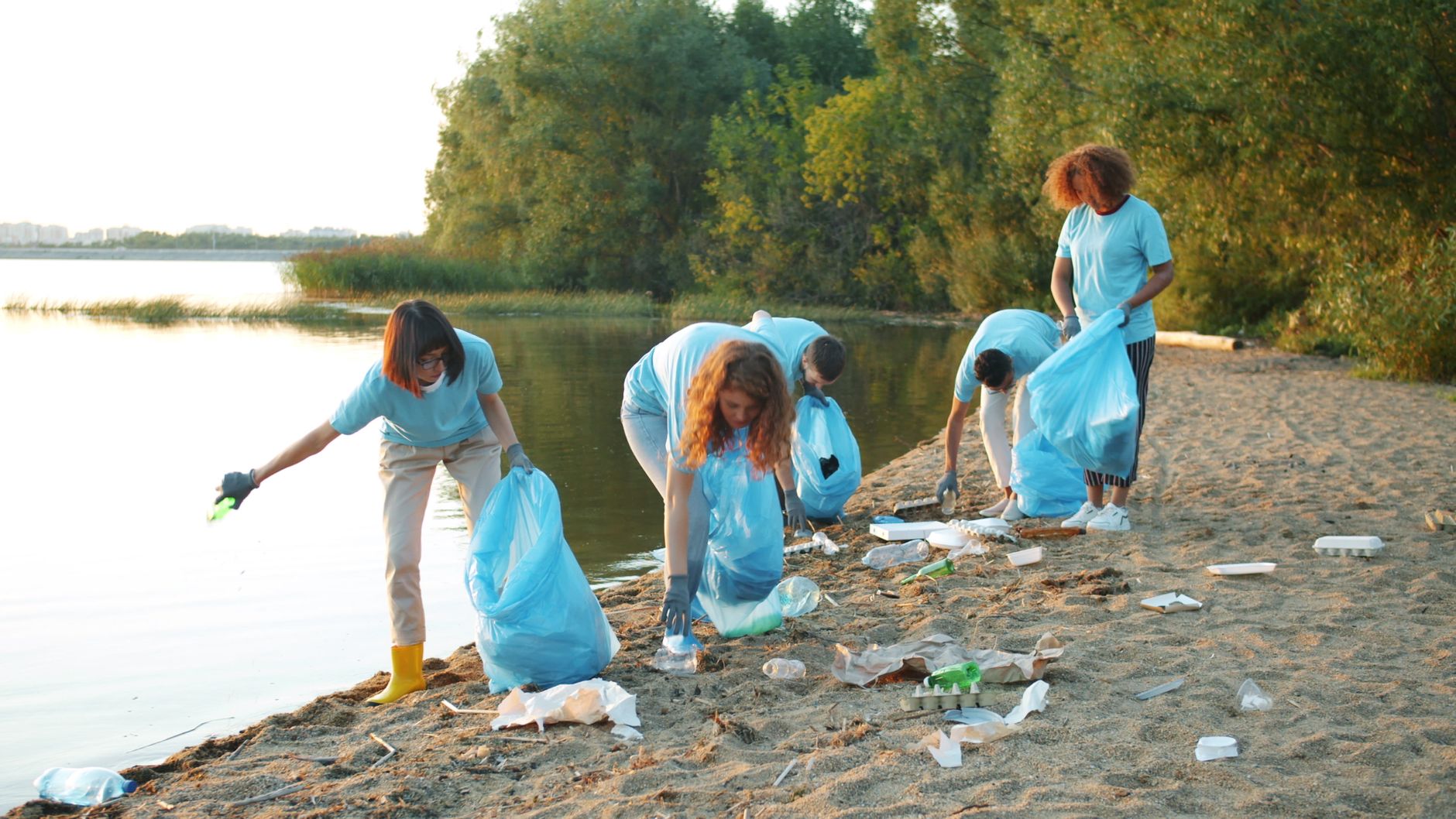
The International Coastal Cleanup, which began in Texas in 1986 with about 2,800 volunteers, made a similar move. According to Ocean Conservancy, its founders asked volunteers to go beyond picking up trash and record every item on a standardized data card. That card is a retention device disguised as a form. It turns an afternoon of litter into a line in a database, the receipt for usefulness that the Galaxy Zoo volunteers said they wanted. Since its beginning, Ocean Conservancy reports, more than 19 million volunteers have collected more than 400 million pounds of trash.
The Ledger
So, the accounting for crowd-powered climate work. The win: labor at a scale no budget could buy. Sauermann and Franzoni valued the volunteer hours in their seven projects at roughly $1.55 million, at a research assistant's wage of twelve dollars an hour. The cost: most of that labor arrives once and never again, and organizers who mistake the sign-up sheet for the project end up designing for a crowd that will be gone by October. The catch: the things that fill the sheet, a viral post, a news story, a launch-day push, are not the things that bring anyone back. Those are slower and less photogenic: a ritual date, a team, a skill that visibly improves, and a record proving your afternoon counted.
I'll disclose my usual defect. This column has always erred toward optimism, and I read the numbers above as more encouraging than they look. A movement does not need everyone to return. It needs to notice who did and treat them as the engine they turn out to be.
Sign the sheet this month, by all means. Then do the rarer and more valuable thing. Come back.