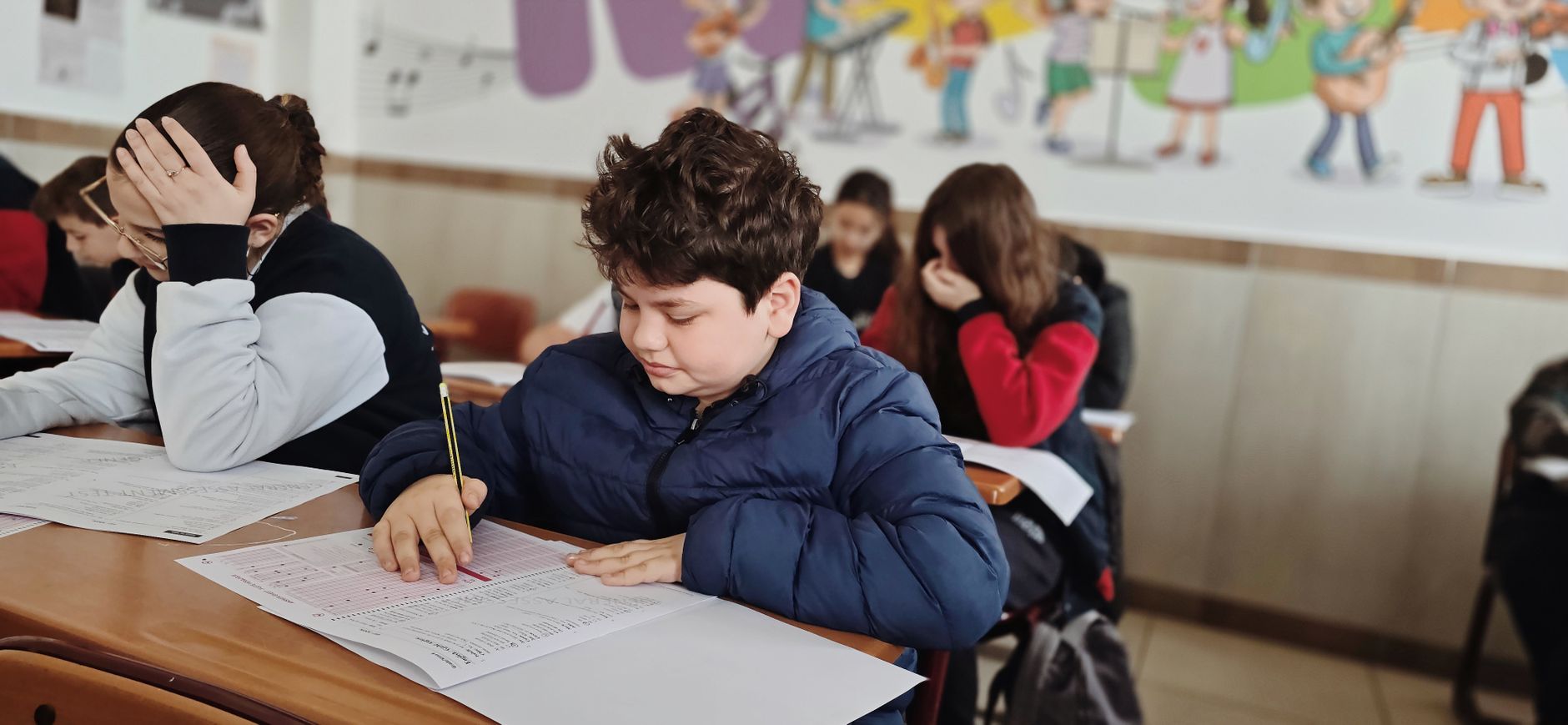

One month from today, on November 19, about 550,000 people are registered to sit Korea's College Scholastic Ability Test, the suneung. It will be the last suneung of its kind. From next year, the exam's elective subjects disappear, and every candidate will take the same core papers. This year's applicants knew it, and the application data, released by the Korea Institute of Curriculum and Evaluation on September 8, shows exactly how they responded.
For the record, the totals. There are 551,864 applicants, 2,310 fewer than last year. Current high-school seniors fell by 16,506, to 355,391. Graduates retaking the exam rose by 13,784, to 173,706. Add those who qualified through the equivalency exam, and 196,473 applicants are not current students, 35.6 percent of the field, the largest such group since the 2004 exam. The coverage pointed to one obvious reason: this is the final year of the current format, and a great many people want one more attempt before the rules change.
Now the more interesting file: what they chose.
Since 2022, suneung candidates have picked electives within Korean, mathematics and the inquiry section. This year, 69.6 percent of inquiry applicants chose social studies only, up from 61.0 percent a year ago, the highest share since the integrated format began. Science-only applicants collapsed from 22.7 to 14.2 percent. In mathematics, 64.9 percent chose probability and statistics, up from 57.1 percent; calculus fell from 39.9 to 32.4 percent, and geometry to 2.7.
The admissions industry has a name for the flight from science: the "sa-tam run," roughly the social-studies dash. To understand it, you need one fact about the suneung. Its main sections are graded relatively. Your grade depends not only on how well you do, but on who else takes the same subject. The common explanation is that science attracts strong, heavily prepared candidates, so a high grade there is expensive, while social studies looks cheaper. Many students, the data suggests, are not choosing the subject they love or will need at university. They are choosing the curve.
The analysts read the September data the same way. Lim Seong-ho of Jongno Academy projected that the number of social-studies candidates in the top two grades would rise by 9,127 while science would lose 10,201, and noted that advantages and disadvantages will arise between subject choices regardless of students' own effort. Lee Man-ki of Uway said the important change was not the small fall in total applicants, but how much the character of the applicant pool had shifted.
My desk has seen this file before, in another country. When Shanghai and Zhejiang piloted a reformed gaokao, they replaced the old arts-or-sciences streams with three optional subjects chosen from a list. In 2017, the first year candidates sat the new format, only 30 percent of Shanghai candidates and 27.5 percent in Zhejiang chose physics, even though physics was the subject universities there most often required. The logic was identical. Physics drew the strongest students, which made high marks hard for everyone else. One physics teacher explained it to China Daily: "in the gaokao scoring system, it is difficult to get high marks with fewer students taking the test."
Two systems, the same experiment, the same result. Give students a choice among subjects graded on a curve, and many will choose by the curve. The choice that was meant to express interest becomes a calculation about rivals.
Korea's answer, finalized in December 2023, is to remove the choice. From the 2028 exam, the first sat next November by students who entered high school in 2025, the electives in Korean, mathematics and inquiry are abolished. Everyone takes integrated social studies and integrated science. Advanced calculus and geometry drop out of the exam's scope entirely. The relative grading stays.
I find the logic hard to fault and the cost hard to ignore. A common exam ends the gaming, because there is nothing left to game. But it also ends the possibility of a student showing what she can do in the subject she chose. Korea has decided that a fair comparison matters more than a free one, which, as I have filed before, is the suneung's oldest answer to every question.
For the record: next month, half a million people sit the last exam that asked them to choose. What many of them chose was the kindest curve. The drawer marked "electives" closes on November 19.