
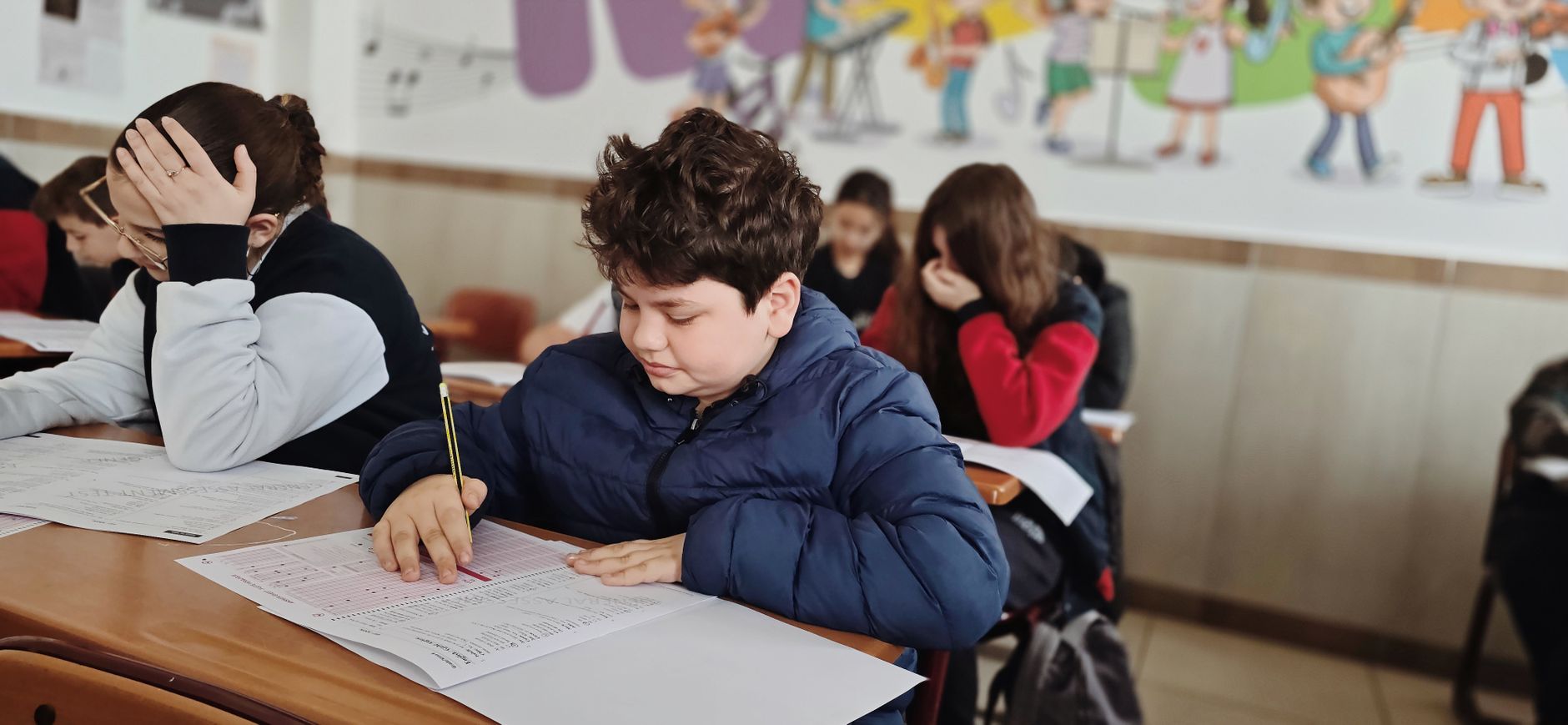
On Tuesday, September 8, the OECD published the results of PISA 2025, the test it gives every three years to fifteen-year-olds around the world. About 760,000 students in 91 countries and economies sat it. Within hours, education ministries began issuing their own readings of it, and since collecting other systems' documents is this desk's only hobby, I spent the following week filing them.
The underlying numbers first, for the record. Across the OECD, the average score fell again in mathematics, from 472 in 2022 to 463, and in reading, from 476 to 461. Science barely moved, from 485 to 482. In 2015, the maths average was 485. Andreas Schleicher, who runs the program, put it plainly: "Learning outcomes have stagnated or declined in many countries, in some cases for well over a decade." At the top, four Chinese provinces tested together scored 612 in mathematics, and Singapore led reading at 535.
Exhibit A, Seoul. Korea scored 522 in mathematics, 526 in science and 501 in reading, all far above the OECD average. But reading fell 14 points from 2022, the share of students at the lowest reading levels rose from 14.7 to 17.8 percent, and the share at the highest fell from 13.3 to 10.3 percent. The Ministry of Education stressed that Korea still sits near the top, then named a likely suspect: the digital environment, short-form video and social media among it, which it said may have weakened students' motivation to read. Its remedy is administrative: a school reading program grows from 1,000 schools to 3,000.
Exhibit B, Singapore. First in the world in reading, Singapore's ministry led its release with something else: the new computational problem-solving domain, where over half of its students reached the top levels, against about a quarter across the OECD. It added that 15 percent of its students were top performers in all three core subjects at once, against an OECD average of 3 percent. To its credit, it also filed the uncomfortable line: the gap between its strongest and weakest students widened between 2022 and 2025.
Exhibit C, London. England climbed to eighth in science, joint ninth in reading and tenth in mathematics. The Department for Education called the results "a strong academic foundation to build from," then did something rare for a government: it said it did not want England to rise in the rankings "solely because other countries are declining." England's maths score is still 12 points below its 2018 level.
Exhibit D, Ankara. Türkiye's ministry announced that the country had shown the greatest improvement across all three domains among OECD members, with science up 18 points to 494, reading up 16 to 472, and mathematics up 9 to 462. Its headline sentence was a count of places: "Türkiye has moved up 15 places in science, 18 places in reading and 11 places in mathematics."
Exhibit E, Washington. American fifteen-year-olds scored 463 in mathematics, precisely the OECD average, and 490 in reading. Newsweek's analysis observed that the United States rose in the rankings mainly because others fell faster, and that its response rate fell short of PISA's own targets.
Laid side by side, the releases sort into families. Some read the rank: England and Türkiye, both of which moved up a table in which most of the field moved down. Some read the domain: Singapore, choosing the measure that showed it best. Some read for a cause: Korea, reaching for the phone before the data could name one. None is false. Each is a choice about which number gets the first paragraph.
The number missing from every first paragraph in my stack is this one. Across the OECD, 20 percent of fifteen-year-olds are now low performers in all three subjects, up from 16 percent in 2022. That is not a ranking. It is a floor, and it is sinking. A league table can tell a minister where a country stands relative to its neighbors. It cannot say that the whole neighborhood is lower than it was.
I have a soft spot for PISA's habit of reporting ranks as ranges. Korea, among OECD members, placed somewhere between first and ninth in reading, because a sample of students cannot support a single exact place. That is the most honest sentence of the whole cycle, and none of the releases I filed put it in a headline. For the record, my filing: one test, a stack of press releases, and a floor that none of them led with.