
On Tuesday, its seventh Tuesday in theaters, Spider-Man: Brand New Day quietly did the loudest thing a movie can do. It passed Star Wars: The Force Awakens to become the highest-grossing film ever released in the United States and Canada: roughly $936.7 million against $936.6 million, a margin smaller than a rounding error on a studio's catering budget. Records are records, though, and this one had stood for more than a decade. The biggest movie in North American box office history is now a Spider-Man movie.
I have a professional problem with this. Last October I wrote, in this newspaper, the obituary of the monoculture: the era when a whole society watched, hummed, and argued about the same things at the same time. I stand by most of it. But I ended that column by admitting that sometimes the corpse sits up. I did not expect it to sit up quite this high, in quite this costume, and stay sitting for seven weeks.
The Receipts
Let's lay out the numbers before the arguing, because the numbers are genuinely absurd. Brand New Day opened the last weekend of July to $360 million in North America, beating Avengers: Endgame's $357 million for the biggest domestic opening ever, and pulled in more than $900 million worldwide in that first weekend alone. For scale, the previous Spider-Man film, No Way Home, opened to $260 million and was itself considered a once-in-a-generation event. Worldwide, the new one sits at about $2.45 billion, third on the all-time list behind only Avatar and Endgame.
Tom Holland, on his seventh outing in the suit and his fourth solo film, now headlines the top-grossing domestic release of all time. Zendaya, Jacob Batalon, Sadie Sink, and Jon Bernthal as the Punisher came along for the ride. For seven weeks, this movie was not programming. It was weather. It was the thing your teachers, your little cousins, and the guy at the gas station had all seen, or were about to.
The Case Against My Own Obituary
So the culture writer's duty is to ask the obvious question honestly: was I wrong? If the monoculture is dead, how does a single film assemble the largest domestic audience, in dollars, that the box office has ever recorded?
The generous answer is that I was never arguing that audiences can't gather. I argued that they no longer gather by default, that shared moments now have to be summoned rather than simply delivered by three channels and one cineplex. A Marvel release is the most expensive summoning ritual ever devised: years of teasers, a cast list reported like election returns, a release date treated as a national appointment. By that logic, Brand New Day isn't a refutation. It's the exception working exactly as advertised.
But that answer is a little too comfortable, and comfortable answers are how columnists avoid learning anything. So let's audit.
Read the Fine Print
First, the record is measured in dollars, not people. The box office books keep their headline numbers unadjusted for inflation, and a 2026 dollar does not buy what a 2015 dollar did. Some of this crown was won at the concession stand of the economy, not the turnstile. That doesn't erase the achievement, but it means "biggest ever" and "most watched ever" are not the same sentence.
Second, and more interesting: look at who gets to be the shared text. Spider-Man first swung through a comic called Amazing Fantasy in 1962, created by Stan Lee and Steve Ditko. The record he just broke belonged to Star Wars, another heirloom from the twentieth century. The other films in this year's top five as of early August were Toy Story 5, The Super Mario Galaxy Movie, Michael, and The Odyssey, which is adapting a property roughly twenty-seven centuries old. The most original idea on that list is Homer's.
Which is to say: the fragmented audience can absolutely still gather. It just only seems to gather around inheritances: characters and stories built during the old scarcity, when there was one well and everyone drank from it. The monoculture didn't come back to life this summer. Its estate did. We are a generation living very comfortably off a trust fund of shared references that were assembled before we were born.
And the estate knows it. Next week, Marvel sends Avengers: Endgame back into theaters as a re-release called Endgame: Encore. When your back catalog can compete with your new releases, you are no longer in the movie business so much as the heirloom business.
Why I'm Not Retracting (Yet)
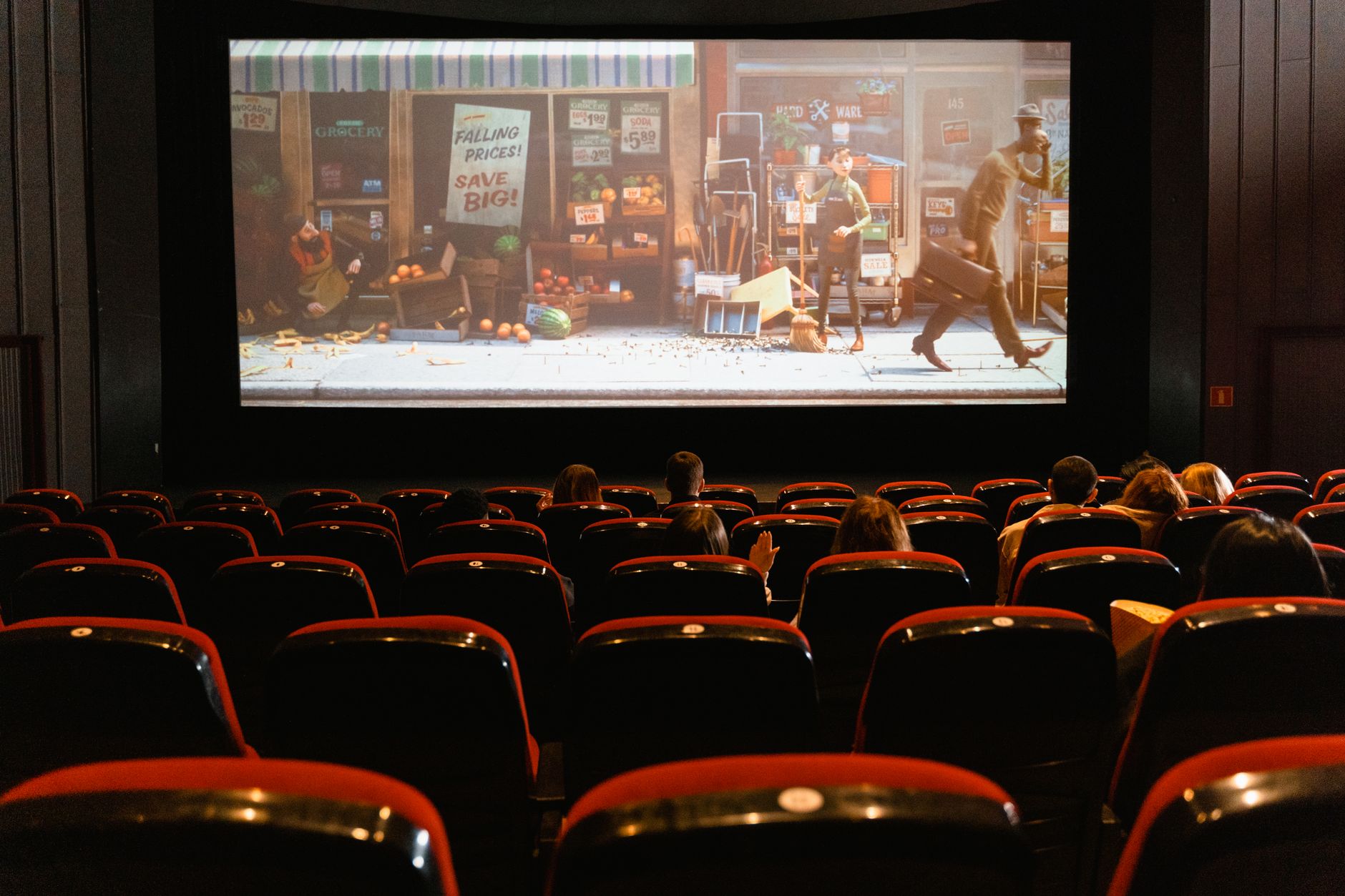
Fairness requires the other side of the ledger, so here it is. Something real happened in theaters this summer. Strangers sat in the dark together and gasped at the same moment. Friends planned outings around a release date. People who share almost no other cultural vocabulary now share this one. That is the thing my obituary said we were losing, and for seven weeks we had it back. I'm not going to sneer at a full theater. A full theater is the closest thing culture has to a town square.
What I'd rather do is sharpen the question. The monoculture's survivors, it turns out, are not new texts. They are old ones, recast and re-released, wearing better visual effects. The question for my generation isn't whether we can still gather. Obviously we can, given a familiar enough face. The question is whether anything we invent will ever be big enough to gather around, or whether our grandchildren will be lining up, in some 2070 summer, for a ninth Spider-Man actor and calling it brand new.
I'll keep the obituary on file. The patient is clearly still breathing; I'm just no longer sure it's growing. Brand new day. Same suit.