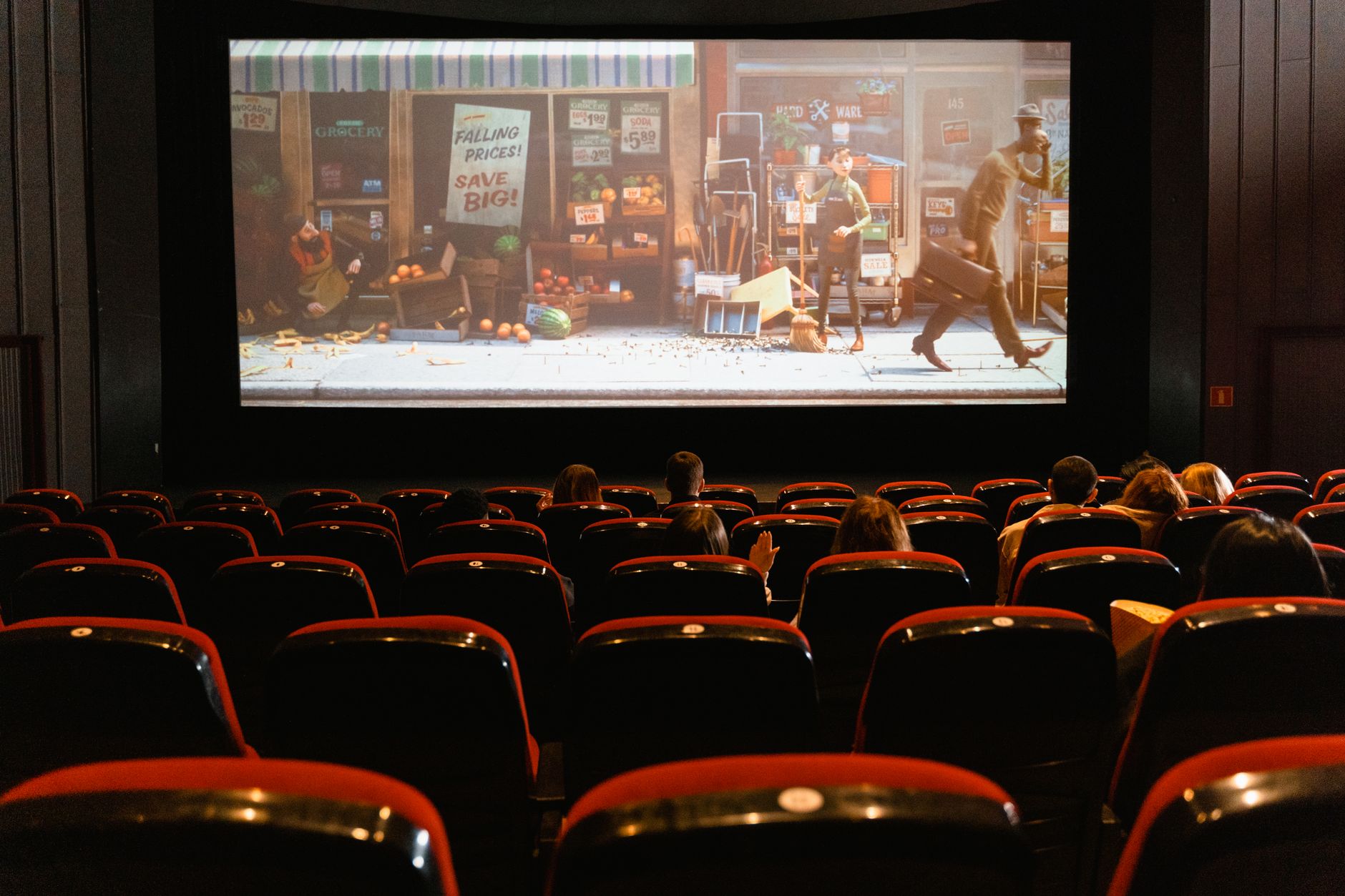


Here is a sentence I did not expect to type this fall: the most exciting movie event of October is a three-hour documentary about a convicted fraudster.
You Can See Everything, directed by Nathan Fielder and Lance Oppenheim, opened last weekend to an estimated $15 million from just 855 theaters. That put it second in North America, behind Paramount's Street Fighter, which needed more than four times as many screens to make about twice the money. According to A24, the film's distributor, more than 2,000 showings had sold out by Sunday morning. The subject is Elizabeth Holmes, the Theranos founder convicted of defrauding investors, whom the filmmakers followed, along with her partner Billy Evans, in the weeks before she went to prison in 2023. The project was kept secret for years and unveiled as a surprise premiere at the Telluride Film Festival in September. This weekend it expands nationwide.
A24 called it "one of the largest limited-release openings of the 21st century." For once, the press release undersells it.
The Numbers, Briefly
The record book needs a minute to process this. TheWrap reported that it is the biggest opening for any documentary since One Direction: This Is Us in 2013, and, if you set concert films aside, the biggest since Fahrenheit 9/11 in 2004. CNN noted it is the largest opening for any film on fewer than 1,000 screens since Borat in 2006. For comparison, Melania, which opened in February and was itself considered a documentary success, made $7.1 million from more than twice as many locations. The new film reportedly cost less than $10 million to make and market combined. It carries a 99 percent critics' score on Rotten Tomatoes and, according to CNN, a record-high average rating on Letterboxd.
That last detail matters more than it looks. Letterboxd is where a lot of my generation logs and argues about movies. When a three-hour nonfiction film tops that crowd's ratings, it isn't being assigned. It's being chosen.
Two Ways to Fill a Theater
Last month I wrote about Spider-Man: Brand New Day becoming the highest-grossing film in North American box office history, and I ended on a worried question: can anything new still gather the fragmented audience, or are we only capable of assembling around inherited characters? This fall has staged a near-perfect experiment on exactly that question.
Exhibit A: the heirloom. On September 25, Marvel sent Avengers: Endgame back into theaters as Endgame: Encore. It opened to $26 million in North America, and by early October its worldwide total had edged past Avatar's, roughly $2.9255 billion to $2.9237 billion, to reclaim the title of highest-grossing film of all time. The re-release also came bundled with an extended look at Avengers: Doomsday, due December 18. A seven-year-old movie, returned to theaters partly as a trailer for the next one, setting a record for the whole history of cinema. The machine is very good.
Exhibit B: the secret. You Can See Everything had no franchise, no toy line, no years of teasers. It had the opposite: a production nobody knew existed, a festival premiere nobody saw coming, a runtime most marketers would call a hazard, and a release on fewer than 900 screens. Every choice that should have shrunk its audience made it scarcer, and scarcity, it turns out, is a summons.
Scarcity Is the Invitation
This is the part that interests me as someone who spends his columns watching how attention is assembled. In a world of infinite streaming libraries, the thing you can watch anytime is the thing you watch never. The thing you can only watch this weekend, in this room, with these strangers, before everyone else spoils it, becomes an event almost by definition. Sellouts produce headlines; headlines produce more sellouts. A limited release in 2026 isn't a compromise. It's a velvet rope, and nothing makes people want to get into a room like a rope.
The film's subject sharpens the irony. Holmes was convicted of defrauding investors who had bought into a story about her company. Now a film about her is riding a wave of genuine hype that appears, by every measure we have, to be earned. I'll leave it to critics to judge the movie itself. As a cultural event, it is the rare case where the buzz and the thing match.
The Audit
Regular readers know I can't celebrate anything without checking its pockets, so: this is not a pure folk uprising. A24 is one of the most skilled marketers in the business, and its brand is itself a kind of inherited audience, a following that will show up for the logo. Fielder arrived with a devoted following from his television work. The secret-project-surprise-premiere strategy is a strategy, executed by professionals. Scarcity can be manufactured just as surely as hype can.
And $15 million is still well short of the $26 million Endgame: Encore made in its North American opening, never mind the $360 million Brand New Day opened to in July. If the question is which model pays for the industry, the answer is still the heirloom.
But that was never my question. My question was whether a new text, with no inheritance and no cape, could still pull strangers off their couches and into the same dark room at the same time. Last weekend, more than two thousand sold-out showings answered yes.
The Lesson for the Rest of Culture
The monoculture is not coming back; I've filed that obituary and I'm keeping it. But the experiment suggests something hopeful about what replaces it. The audience isn't gone. It has just stopped responding to volume alone. It responds to stakes: a secret, a deadline, a room with a limited number of seats, the sense that missing this means missing a conversation.
Somewhere, a studio executive is watching these numbers and wondering how to put a velvet rope around a superhero. Good luck. You can't fake being new. The documentary's title is a promise about transparency. Its box office is a lesson in the opposite: sometimes the way to get everyone to look is to let almost no one see it first.